How to Address an Envelope
Quick answer
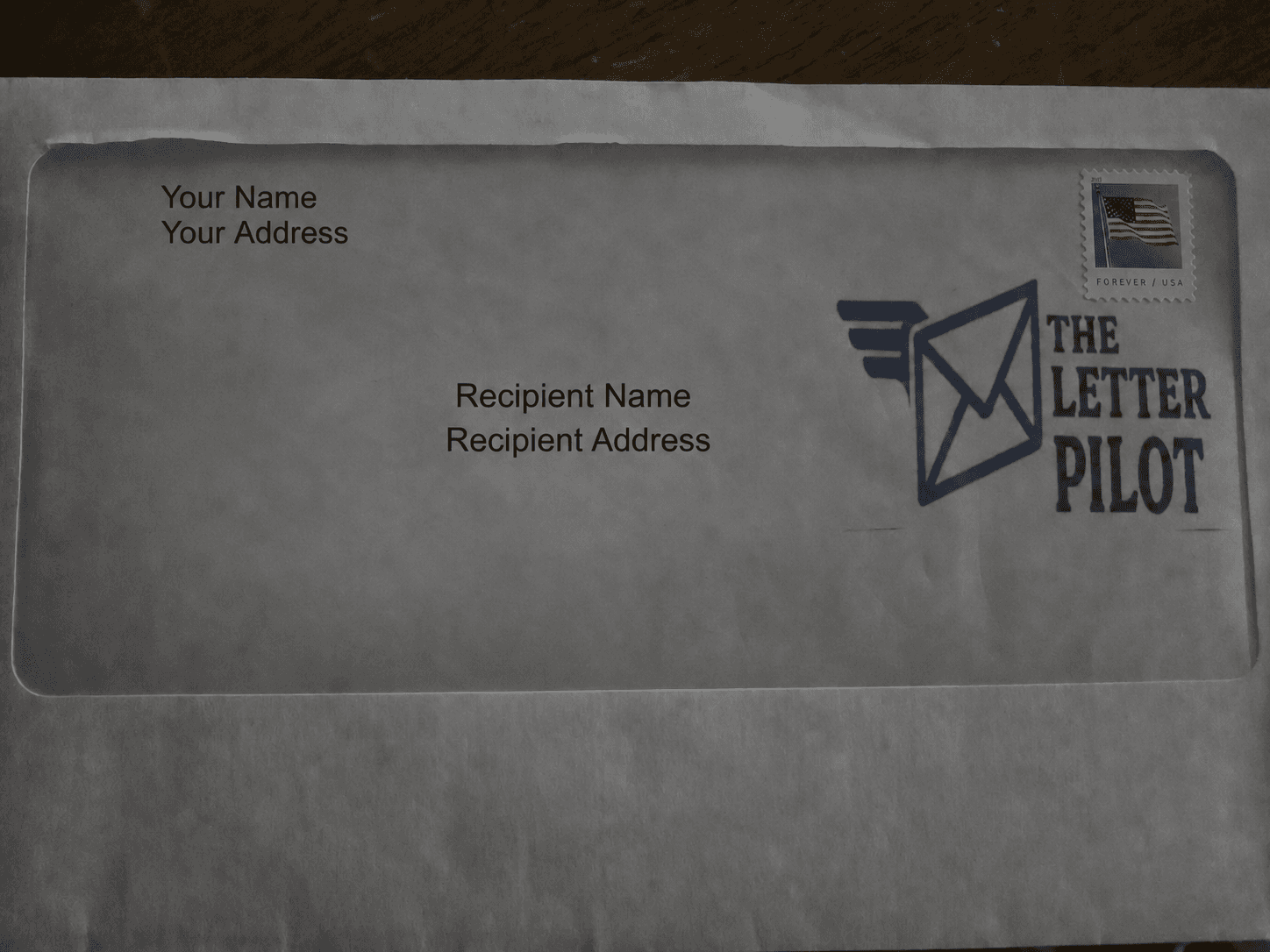
An envelope has three jobs to do:
Upper left
Your return address
Center
The recipient's full address
Upper right
Stamp or other postage
Addressing an envelope is one of those things that feels obvious until you sit down with a pen and second-guess every corner. Keep it simple: make the recipient's address complete, include any apartment or suite information, and leave the bottom edge of the envelope open for USPS processing.
Still choosing an envelope? Use the envelope size finder to match your paper or card before addressing it.
Where Each Part Goes
Your return address belongs in the upper-left corner. The delivery address goes in the center, and postage belongs in the upper-right corner. The diagram below shows the basic layout on a standard envelope.
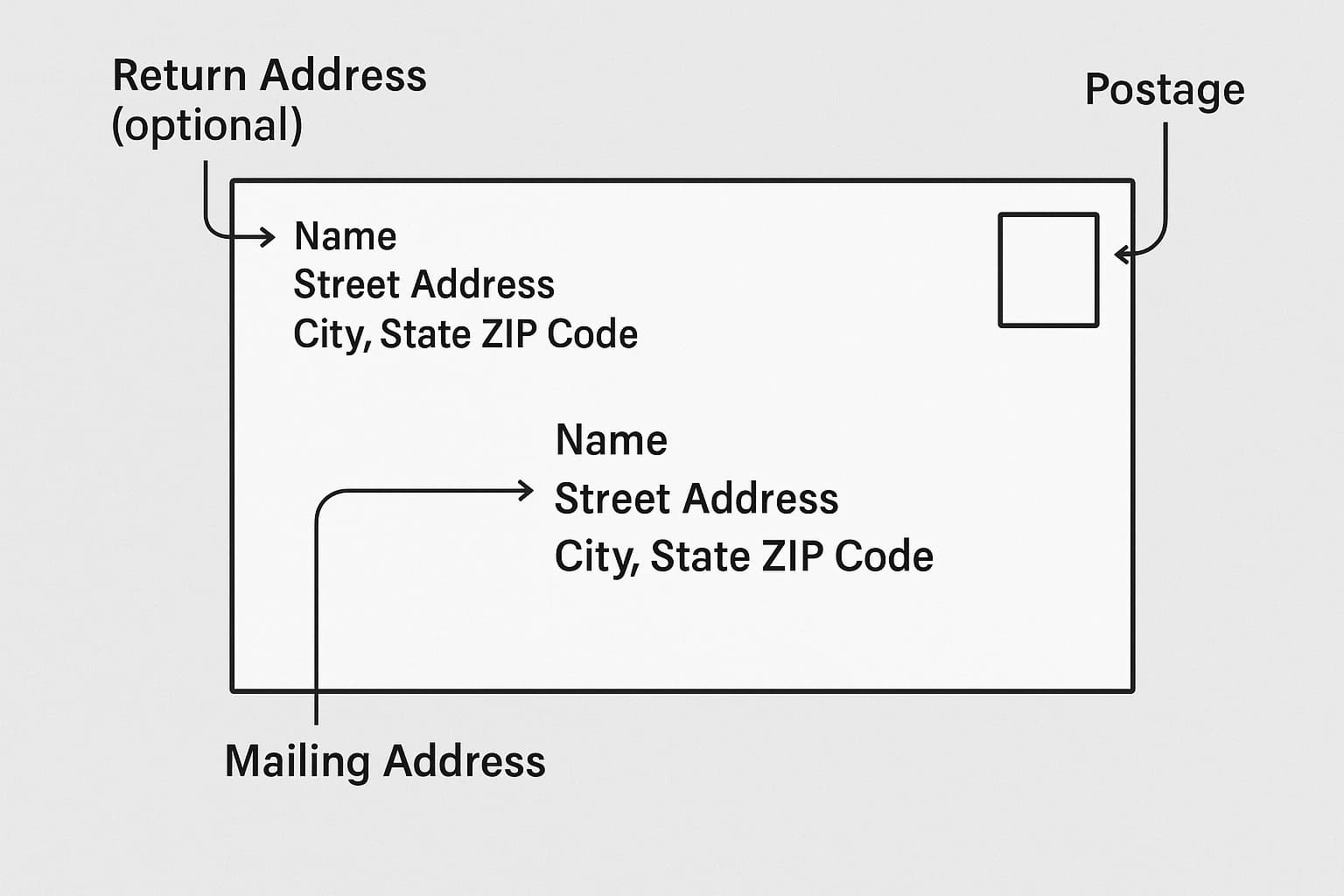
USPS recommends clear, dark text on a light background, with the address lines parallel to the bottom of the envelope. The bottom area is reserved for USPS barcode processing, so do not put extra writing or artwork there. USPS Publication 28, Appendix A1 has the full readability guidance.
Recipient Address Format
For a typical residential address, use three lines:
1234 MAIN ST APT 5B
SPRINGFIELD IL 62704
- Recipient's name
- Street number, street name, and any apartment or suite information
- City, state abbreviation, and ZIP Code
Use the address the recipient actually gives you. If you are not sure whether the street, city, state, and ZIP Code are correct, check the complete mailing address with our address validator. Once the street address and any apartment or suite number are confirmed, use the ZIP+4 lookup tool to find the matching nine-digit ZIP Code.
Sender Address Format
For a typical sender address use the same format as the return address shown above. It's just the three normal lines.
5678 OAK AVE
DENVER CO 80202
- Sender's name
- Street number, street name, and any apartment or suite information
- City, state abbreviation, and ZIP Code
Put this sender-address block in the upper-left corner of the envelope so USPS can return undeliverable mail to you.
Apartments, PO Boxes, and Business Mail
Apartment or suite
Put the unit information with the street address when it fits.
1234 MAIN ST APT 5B
PO Box
Replace the street line with the box line.
PO BOX 1234
If the apartment or suite information will not fit on the same line, USPS provides an alternate placement immediately above the street address. For a deeper walkthrough, see our apartment, suite, and unit guide. For PO Boxes, use PO BOX and the number, as USPS specifies in Publication 28, section 281.
Court correspondence has additional title and filing rules. If the recipient is a judge, see how to address a letter to a judge before mailing it.
Common Mistakes to Avoid
- Leaving out the apartment or suite number. A street address can be valid while still missing the information needed to reach the right door.
- Putting postage anywhere but the upper-right corner. Keep that area for the stamp, meter imprint, or label. If the envelope is heavy or unusually shaped, check the amount with our USPS postage calculator.
- Writing across the bottom of the envelope. Leave the lower portion clear for postal processing.
- Guessing at a ZIP+4. Use the five-digit ZIP if that is the code you have, or verify the complete address first.
- Using an incomplete return address. Include enough information for the letter to come back to you if delivery fails.
Frequently Asked Questions
Do I need ZIP+4?
A five-digit ZIP Code is sufficient for ordinary mail. USPS uses ZIP+4 information for more precise sorting when it is available, but you do not need to guess one.
Including an envelope for someone to mail a reply? See how to prepare a self-addressed stamped envelope.
Sources
More mailing guides
USPS guide
How to Address a Postcard: Where the Stamp and Address Go
Learn where to write the address, message, and stamp on a postcard, plus the size and postage basics before you mail it.
Read guide
USPS guide
How to Send a Self-Addressed Stamped Envelope
A self-addressed stamped envelope is an envelope someone can use to mail something back to you. Here is how to prepare it without mixing up the two addresses.
Read guide
USPS guide
How to Address a PO Box on an Envelope
Put the recipient name first, the PO Box number on the next line, and the city, state, and correct PO Box ZIP Code on the final line.
Read guide
USPS guide
How to Address Military Mail (APO, FPO, and DPO)
Use the correct APO, FPO, or DPO military address format. Learn where the name, unit, AA/AE/AP code, ZIP Code, postage, and customs form belong.
Read guide
USPS guide
Apt vs Unit vs Suite: USPS Secondary Address Format Examples
Use this guide before mailing when you need the right apartment, unit, suite, or floor abbreviation and placement. Includes USPS-friendly examples for secondary address formatting.
Read guide