
How to Address Military Mail (APO, FPO, and DPO)
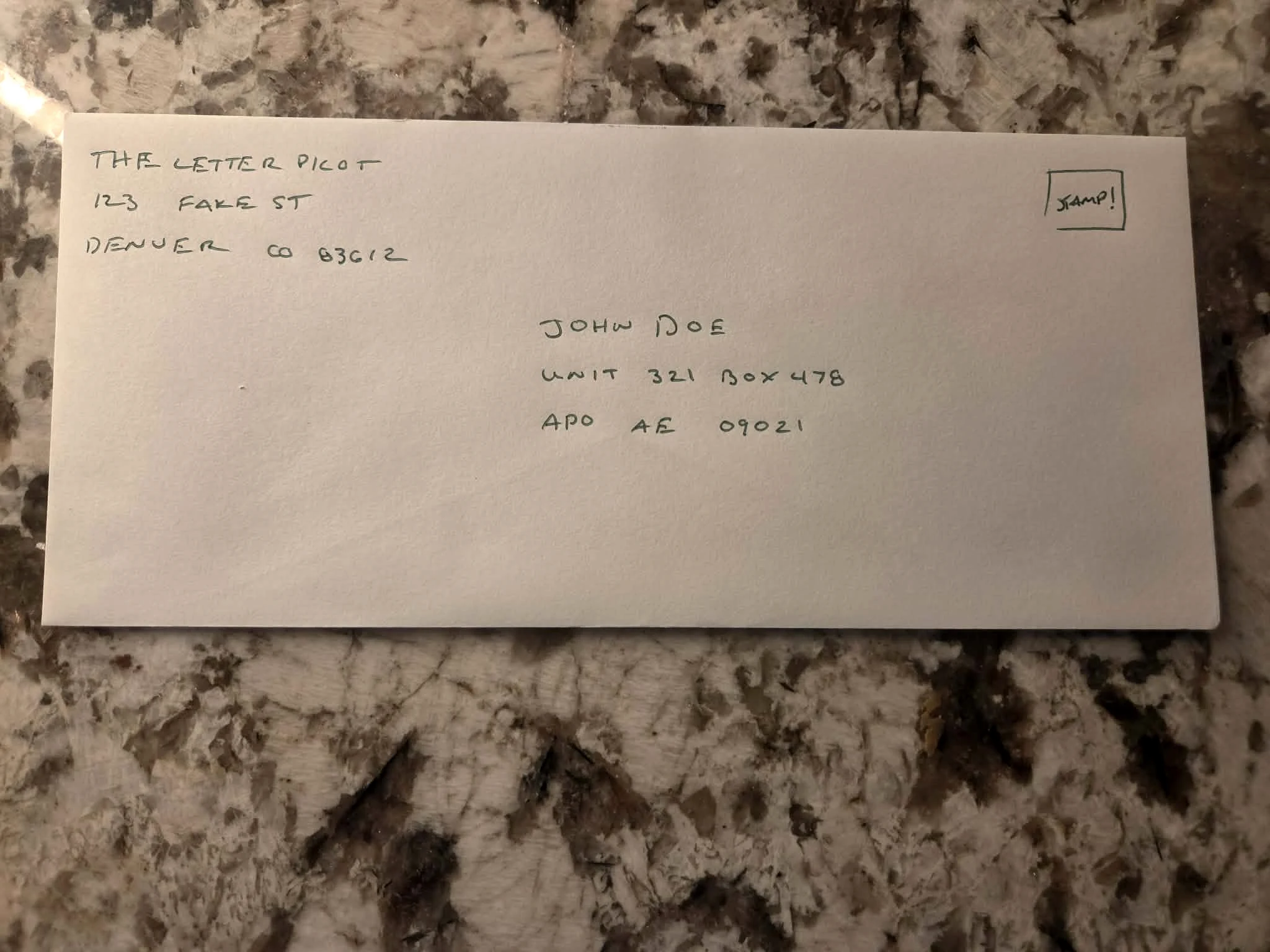
The first time we saw a military address come through, I was baffled. I had no idea what I was sending or whether USPS would even take it. More and more customers started reaching out to ask if we could send mail to these addresses, and honestly, I was not sure. Since then, we have learned a lot about how military addresses work and how they are formatted, which can be a little tricky. These mailings are fairly uncommon at The Letter Pilot, but they do come through our print line occasionally. We created the quick tool below to help you check the formatting.
This tool checks whether an APO, FPO, or DPO address looks complete and is formatted correctly. It catches missing unit or box information, AA/AE/AP codes that do not match the ZIP prefix, and foreign country lines that should not be included.
It does not confirm that the person actually receives mail at that address, but it can catch most common mistakes before you send anything.
We do not store your address anywhere.
APO, FPO and DPO Address Checker
Check whether a military mailing address is formatted correctly before sending.
What APO, FPO, and DPO Mean
Think of APO, FPO, and DPO as the city in a regular mailing address. When you fill out the recipient address block on an envelope or letter, use one of these designations instead of a U.S. city. For example, instead of Denver, the city would be APO. The explanations below show what each one means.
APO
Army Post Office addresses commonly serve Army and Air Force personnel and other authorized recipients. APO stands for Army Post Office. It's used for Army and Air Force personnel who are stationed outside of the country.
FPO
FPO stands for Fleet Post Office. It is used for Navy, Marine Corps, and Coast Guard personnel, including recipients aboard ships and at eligible overseas or fleet-supported locations.
DPO
DPO stands for Diplomatic Post Office. These addresses are used for U.S. diplomatic locations.
So What are the AA, AE, and AP Codes?
The two-letter code is part of the military address. It does not identify the recipient's branch of service.
AA
AA means Armed Forces Americas and uses ZIP Codes beginning with 340.
AE
AE means Armed Forces Europe and uses ZIP Codes beginning with 090 through 098.
AP
AP means Armed Forces Pacific and uses ZIP Codes beginning with 962 through 966.
What About the Address Line?
We've covered what would be the equivalent of a city and state for your military address, but we still need to understand what the address line should contain.
This line contains the recipient's military delivery information. PSC means Postal Service Center, while CPR means Consolidated Postal Room. You may also see OPC for Official Postal Center, UPR for Unit Postal Room, UNIT, a ship name, and a box number. Do not choose or guess one of these yourself. Copy the complete line exactly as the recipient gave it to you.
The Military Address Format
So now that we've covered the basics of what all these acronyms mean, we have all the information we need to completely fill out the recipient address. The only thing we haven't covered is the first line. Luckily, that's the easiest one. It's still just the name of the person you want to send mail to. Let's piece it all together now:
RECIPIENT'S FULL NAME AND RANK, IF PROVIDED
EXACT UNIT, POSTAL CENTER, SHIP, AND BOX INFORMATION
APO, FPO, OR DPO + AA, AE, OR AP + ZIP CODE
Do You Need a Destination Country?
No. Never include a destination country when mailing to a military address. It is not necessary, and there is no reason to specify the actual country. The military postal system does not require it, and including it can cause confusion by departing from the standard military address format.
Address Examples
These examples show the structure only. Always copy the recipient's exact delivery line and ZIP Code.
APO example
JOHN DOE
PSC 5698 BOX 2002
APO AE 09400
FPO example
SEAMAN JOHN DOE
UNIT 100100 BOX 4120
FPO AP 96691
DPO example
JANE T DOE
UNIT 9900 BOX 0500
DPO AE 09701-0500
Incorrect last line
APO AE 09400GERMANY
Leave the foreign country off the address.
Once you have the complete unit or box line, APO, FPO, or DPO city, and AA, AE, or AP code, use our USPS address validator to check the address against USPS data and see its standardized format. If you specifically need the complete nine-digit ZIP Code, use our ZIP+4 lookup. USPS may not confirm every military delivery point, so always copy the recipient-provided unit, box, and ZIP exactly. These tools do not verify recipient identity or mail-forwarding status.
Postage and Customs Forms
If you are mailing a standard letter, plan on paying the same postage you would pay to send it anywhere else in the country. A rectangular First-Class Mail letter weighing 1 ounce or less can be sent with one Forever stamp. Heavier, oversized, square, rigid, or unusually shaped letters require additional postage.
If you are sending goods in a package to an APO, FPO, or DPO address, you will need to fill out a customs declaration, regardless of how much the package weighs. A customs declaration is also required for other mailpieces weighing 16 ounces or more. There are restrictions on what you can mail, and Priority Mail Express requires a specific customs form regardless of weight, value, or contents.
Military Mail Restrictions
Each military ZIP Code can have different mailing restrictions. The best way to check them is with the official USPS Military Restrictions tool.
Delivery Time and Tracking
Delivery time can be hard to predict. The first time I sent one of these, a customer and I watched helplessly as the letter took three weeks to reach its destination. We could only track it to a location in the United States before it entered the military postal network.
That experience is not a guaranteed delivery estimate, but tracking visibility can become sparse after a piece enters the military system. Certified Mail can provide a mailing receipt and delivery or attempted-delivery verification where the service is available, but it does not make the mail travel faster or guarantee detailed tracking along the way. Just know that your letter or package may take a while to reach the person you are sending it to.
Common Military Addressing Mistakes
Adding the country
APO, FPO, or DPO plus AA, AE, or AP replaces the foreign city, state, and country lines.
Leaving out the unit or box
The military delivery line routes the mail after it reaches the military postal system. Copy it exactly.
Guessing the state code
AA, AE, and AP correspond to military postal regions. Use the code provided with the address.
Assuming domestic rules are the only rules
Domestic prices apply, but customs forms and destination-specific restrictions may still apply.
Can I Use an Online Mailing Service to Send to Military Addresses?
Yes. You can use an online mailing service to send mail to military addresses, and you can use The Letter Pilot as well. The Address Book lets you add and validate the military address before sending. It correctly formats the address, and we then print and mail your letter using whichever mail class you select.
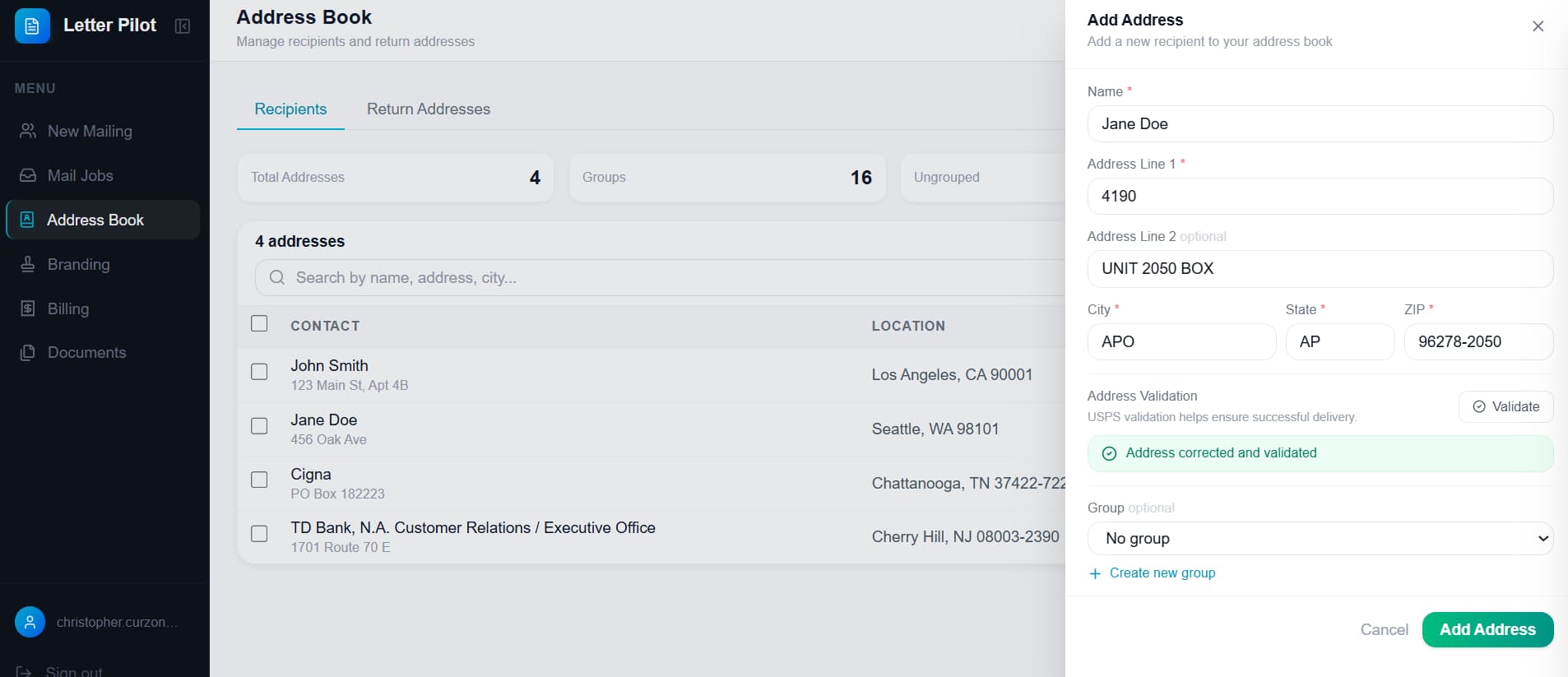
To use the Address Book, sign up for a free account.
Sources
- USPS Military and Diplomatic Mail guidance
- USPS Domestic Mail Manual 703.2, Overseas Military Mail
- USPS Publication 32, Glossary of Postal Terms
- USPS military and overseas address format guidance
- USPS domestic letter postage and size guidance
- USPS customs form requirements for military and diplomatic mail
- USPS APO/FPO/DPO Restrictions tool
- USPS Tracking availability and limitations
More addressing and mailing guides
USPS guide
How to Address an Envelope
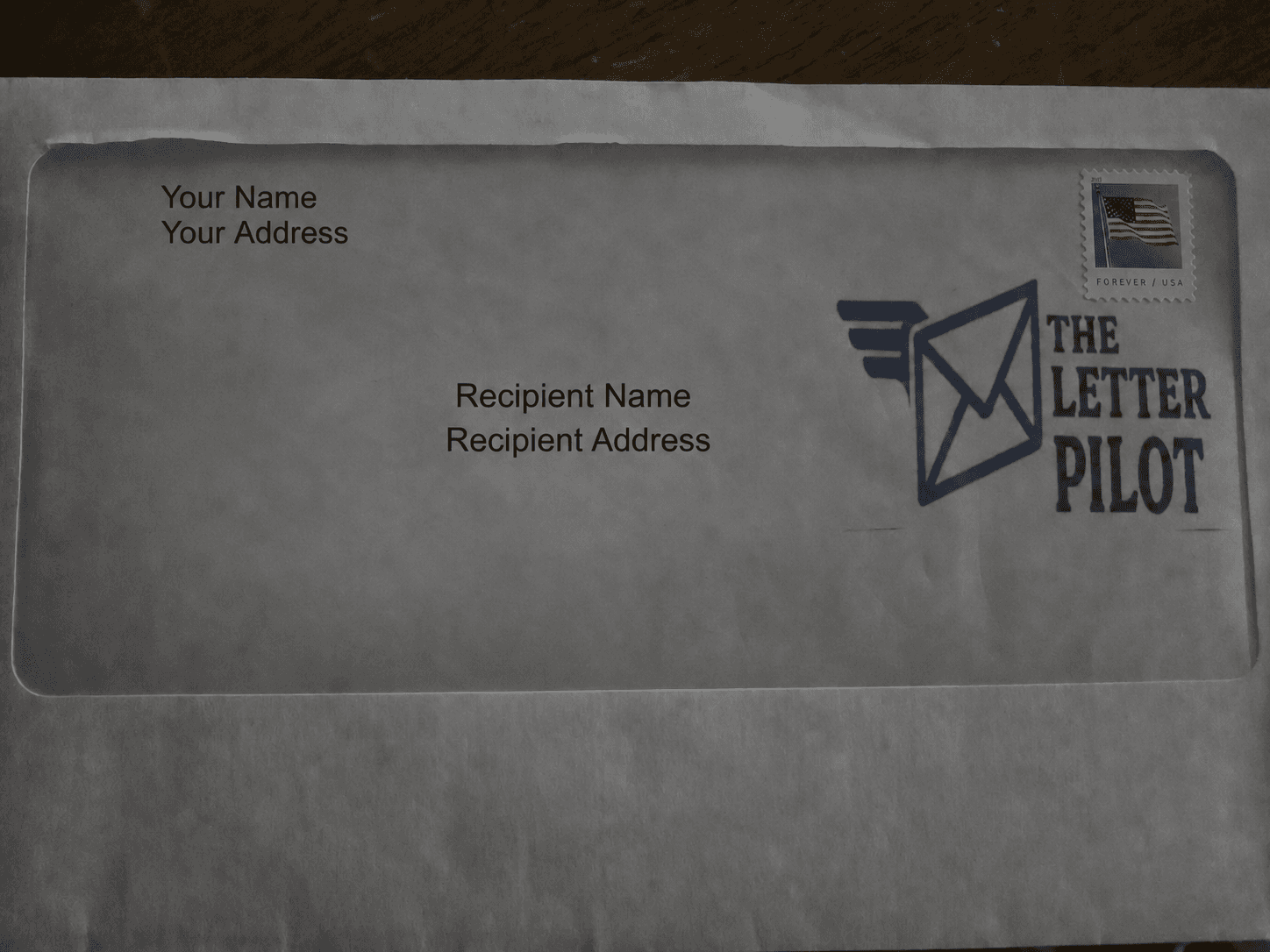
Put your return address in the upper-left corner, the recipient address in the center, and postage in the upper-right corner. Here is the straightforward USPS-friendly format.
Read guide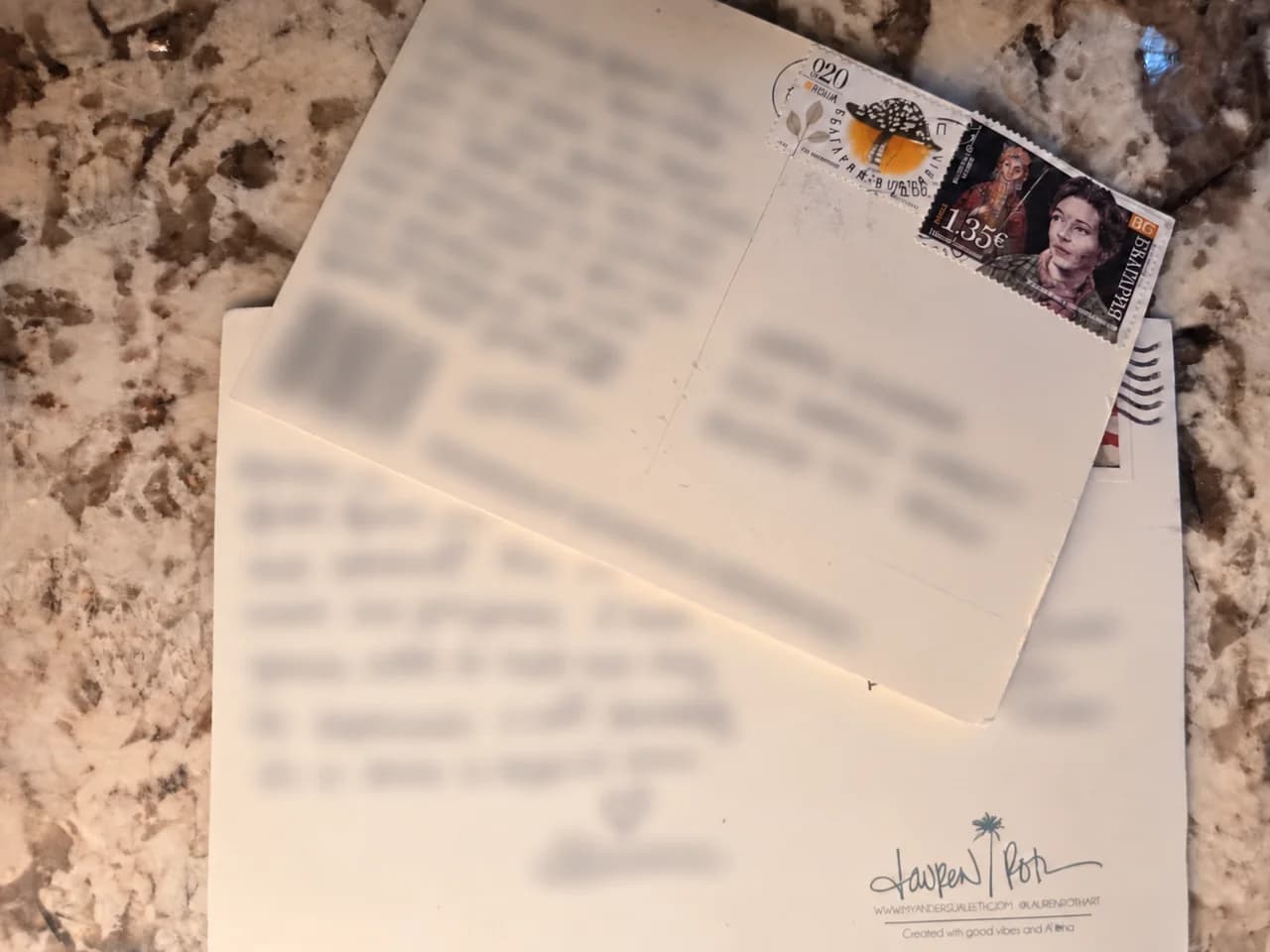
USPS guide
How to Address a Postcard: Where the Stamp and Address Go
Learn where to write the address, message, and stamp on a postcard, plus the size and postage basics before you mail it.
Read guide
USPS guide
How to Send a Self-Addressed Stamped Envelope
A self-addressed stamped envelope is an envelope someone can use to mail something back to you. Here is how to prepare it without mixing up the two addresses.
Read guide
USPS guide
How to Address a PO Box on an Envelope
Put the recipient name first, the PO Box number on the next line, and the city, state, and correct PO Box ZIP Code on the final line.
Read guide
USPS guide
APT, STE & Unit: Address Meanings and Format Examples
Learn what APT, STE, and UNIT mean in an address, where the number goes, and how to format apartment and suite addresses with USPS examples.
Read guide