How to Write a Letter: Format, Examples, and Endings
Quick answer
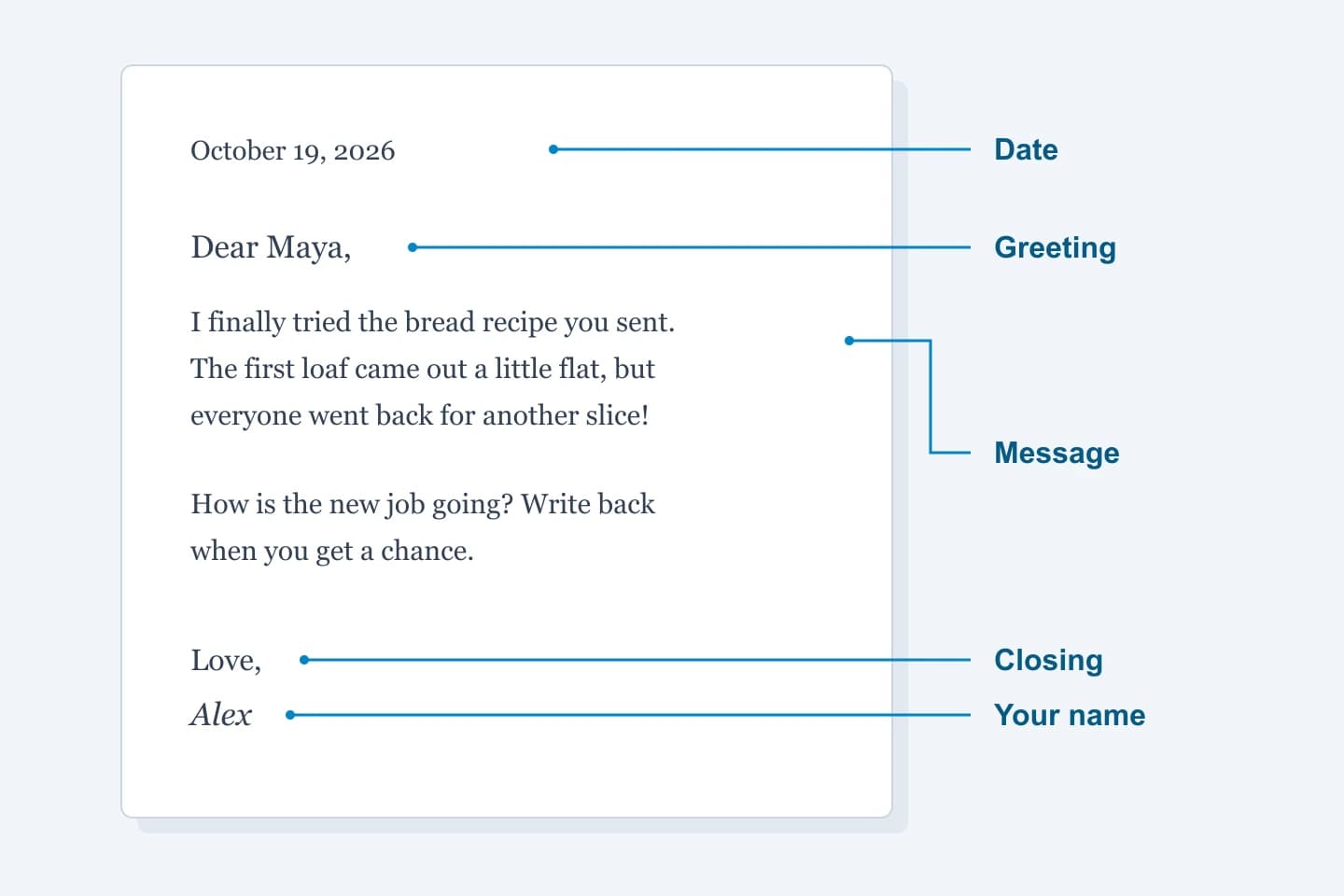
Put the date at the top if you want, start with a greeting like “Dear Sam,” and write your message. Finish with a closing like “Take care” and your name. For a business letter, add your contact info and the recipient's name and address at the top.
Why would you write a letter?
We see all kinds of letters sent through The Letter Pilot. People write to friends, family members, and even lost loves. Sometimes they're sharing news, reconnecting with someone, or saying something that's easier to put on paper.
We also see plenty of business letters: requesting payment for work completed, contacting customers, or communicating with tenants and homeowners.
If you know what you want to say but aren't sure how to start, we'll walk through a few examples, from a personal note to a professional letter.
So What goes in a Letter?
Most letters have a date, greeting, message, closing, and your name.
Below is an old-timey letter I wrote to my good friend Sam. It gives a basic outline of how a letter should be structured.
- Date
- 21st October, 1826
- Greeting
- Dearest Sam,
- Message
- Closing
- Your devoted friend,
- Name
- Chris

How to start a letter
The example still shows the basic layout. Put a date at the top if you want, then start with a greeting. I used “Dearest Sam,” but “Dear Sam” would be a more usual choice.
If I were writing to my wife, I might say “My Lovely Wife” or “My Love.” To my dad, I might write “Hey Pops,” or “Hey Dad.” You can be more informal with family and friends and write the way you actually talk to them.
Start with a greeting you would actually use with that person. “Dear” works for both personal and professional letters. “Hi” or “Hello” is fine for someone you know.
- To a friend: “Hi Sam,” or “Dear Sam,”
- To family: “Dear Grandma,” or “Hi Dad,”
A comma is common after a personal greeting.
What should the first sentence say?
Get to the reason you picked up the pen or started typing to that person. Think of the first sentence as a little hook. Open with something they can relate to: “I finally tried that cookie recipe you sent me. Delicious!” Or, “Welcome to your 40s. You're getting old!” Or simply, “It's been too long, and I miss you.”
Your opening sets the tone for the rest of the letter. It can be funny, affectionate, or a little sentimental, depending on who you're writing to and what you want to say.
So what do you want to talk about?
For a personal letter, I'd start with why you want to write to this person. Maybe you've been thinking about them, have something you want to say, or just miss having them in your life. You don't need a big occasion to put that on paper.
A love letter is an obvious place to start. You can tell someone how much you love them or how much you appreciate what they do for you. If I were writing to my wife, which I'm now realizing I don't do enough, that's probably where I'd begin.
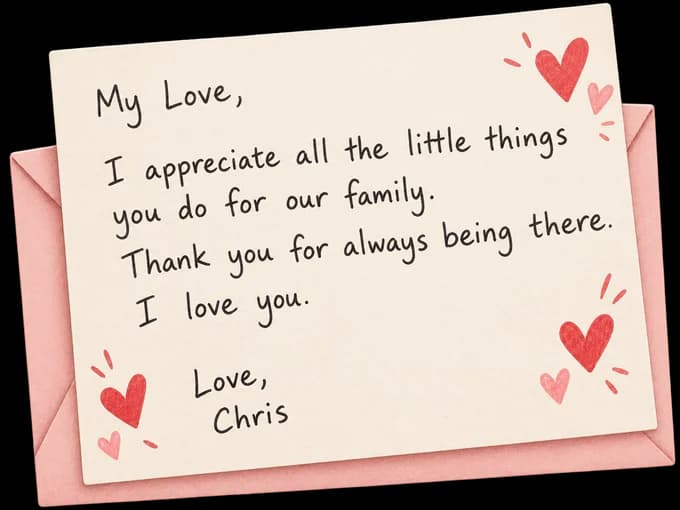
We receive hundreds of love letters through The Letter Pilot. We don't read customer letters as part of our mailing service. Some customers have asked us to review their content, though, and with their permission I've seen some truly adorable love letters. It's sweet to see people taking the time to say those things.
Maybe you want to reconnect with a love who lives far away, or write to a parent you don't get to see very often. Tell them what's been happening in your life, bring up a memory you share, or simply say that you miss them.
Birthdays and graduations are good reasons to write, too. You can wish someone a happy birthday, tell them you're proud of what they've accomplished, or share a little advice for whatever comes next.
Whatever the reason, I'd write the way I talk to that person. Think about what you'd say if they were sitting across from you, and start there.
How to end a letter
You just need to find a way to wrap up your message before you add your sign-off. If you want to keep the conversation going, try “I can't wait to hear back from you” or “Write me back as soon as you can!” You could also say “Call me sometime” and leave your phone number.
Ending a letter to a friend
Let me know how the move goes. I'd love to visit once you're settled.
Take care,
Jamie
Which sign-off should you use?
| Who you're writing to | Closings that fit |
|---|---|
| A close friend or family member | Love, Lots of love, See you soon |
| A friend or someone you know casually | Take care, Best wishes, All the best |
| A professional contact or organization | Sincerely, Best regards |
| Someone you're thanking | With thanks, Gratefully, Thank you |
| If you're a pilot | Signing off, Over and out |
Put a comma after the sign-off and your name on the next line. For a printed professional letter, leave a few blank lines for your handwritten signature above your typed name. Use your full name when the recipient might not recognize your first name.
A personal letter example
Here's a good example of a letter to a friend. This is a more traditional way to write to someone you know than the old-timey letter I sent to my friend Sam above.
October 19, 2026
Dear Maya,
I finally tried the bread recipe you sent me. The first loaf came out a little flat, but everyone went back for another slice, so I'm calling it a success.
How is the new job going? I'd love to hear whether you've settled in. We're free most Saturdays next month if you want to come over for dinner.
Write back when you get a chance. I miss our long kitchen-table conversations.
Love,
Alex
A business letter example
We're very familiar with business letters at The Letter Pilot. We work with many professionals who need to send letters through USPS. Sometimes people don't read their emails, so a letter is another way to get in touch.
For a business letter, keep the details clear and line everything up on the left. We'll walk through an example requesting an invoice. You can also browse our letter templates for help getting started.
The Letter Pilot
[Business street address]
[City, State ZIP]
hello@theletterpilot.com
October 21, 2026
Customer Service Team
[Repair company name]
[Company street address]
[City, State ZIP]
Re: Request for an itemized invoice
Dear Customer Service Team:
I'm writing to request an itemized invoice for the repair completed at our office on October 12. Please include a breakdown of the work, parts, and labor.
My receipt number is [receipt number]. Please send the invoice to hello@theletterpilot.com.
Thank you for your help.
Sincerely,
Chris Curzon
The Letter Pilot
Who are you writing to?
Use the person's name if you know it. If you don't, address the team you need to reach, like “Dear Customer Service Team.”
Get straight to why you're writing
Our example starts with “I'm writing to request an itemized invoice for the repair completed at our office on October 12.” They know what we need from the first sentence. You don't need a long introduction.
Give them the details they need
Make it easy for them to find what you're talking about. In our example, we included the repair date and receipt number. For your letter, that might be an account number, invoice number, or order number. If you're sending a receipt or another document with the letter, mention it so they know to look for it.
Tell them what you want to happen next
Ask for the document, response, or payment you need, and tell them how to get back to you. Our example asks them to send the invoice to hello@theletterpilot.com. Give them a phone number, email, or mailing address they can use to reply.
At The Letter Pilot, we help people mail all kinds of business letters. You might be following up on an unpaid invoice, requesting documents from a company, asking for a refund, or ending a service contract. The details will change, but you still want the person reading it to understand why you're writing and what you need from them.
Should you handwrite or type your letter?
Either works. Handwriting suits a personal note, and typing gives you more room to edit before you print. A typed letter can still sound warm and personal.
For a business request, typing usually makes names, dates, and reference numbers easier to read. Use ordinary paper and a readable font. If you write by hand, use ink that shows up clearly and give yourself enough space between lines.
Read it once, then get it ready to mail
Read the letter back before you put it in the envelope. Check the person's name, any dates or reference numbers, and whether you included the documents you mentioned. For a request, make sure it's clear what you want the reader to do.
Add the mailing address to the envelope, choose the right postage for the finished letter, and seal it. Our envelope addressing guide shows where everything goes. The stamp guide and calculator can help with postage.
Need the full ZIP Code? Try our ZIP+4 lookup. If you're wondering when your letter might arrive, the mail delivery estimator can give you a rough idea.
If you've written the letter but need it printed and mailed, you can send it through The Letter Pilot.
Famous letters in American history
Before texts and emails, people put some pretty important things in letters. Here are a few worth taking a look at, from asking someone to grow a beard to figuring out how to fly.
Grace Bedell suggests a beard
An 11-year-old named Grace Bedell wrote to Abraham Lincoln and suggested he grow a beard. Lincoln replied four days later. A pretty memorable letter to get back in the mail.
Read their letters at the Library of CongressWilbur Wright asks about flight
Wilbur Wright wrote to the Smithsonian asking for information about flight. He explained what he wanted to learn and asked for reading material to help him get started. A pretty fitting letter for The Letter Pilot.
Read Wilbur's letter at the SmithsonianLetter from Birmingham Jail
Martin Luther King Jr. wrote this letter while jailed in Birmingham, Alabama, responding to criticism from local religious leaders. He explained why the civil rights campaign couldn't wait. It's a powerful example of using a letter to make your case.
Read about King's letter at the King Institute
Sources
- Purdue OWL: writing the basic business letter
- University of Wisconsin Writing Center: business letter format
- USPS: sending letters and postcards
- Library of Congress: Grace Bedell and Abraham Lincoln
- Smithsonian Archives: Wilbur Wright's letter of May 30, 1899
- The King Institute: Letter from Birmingham Jail
More USPS guides
USPS guide
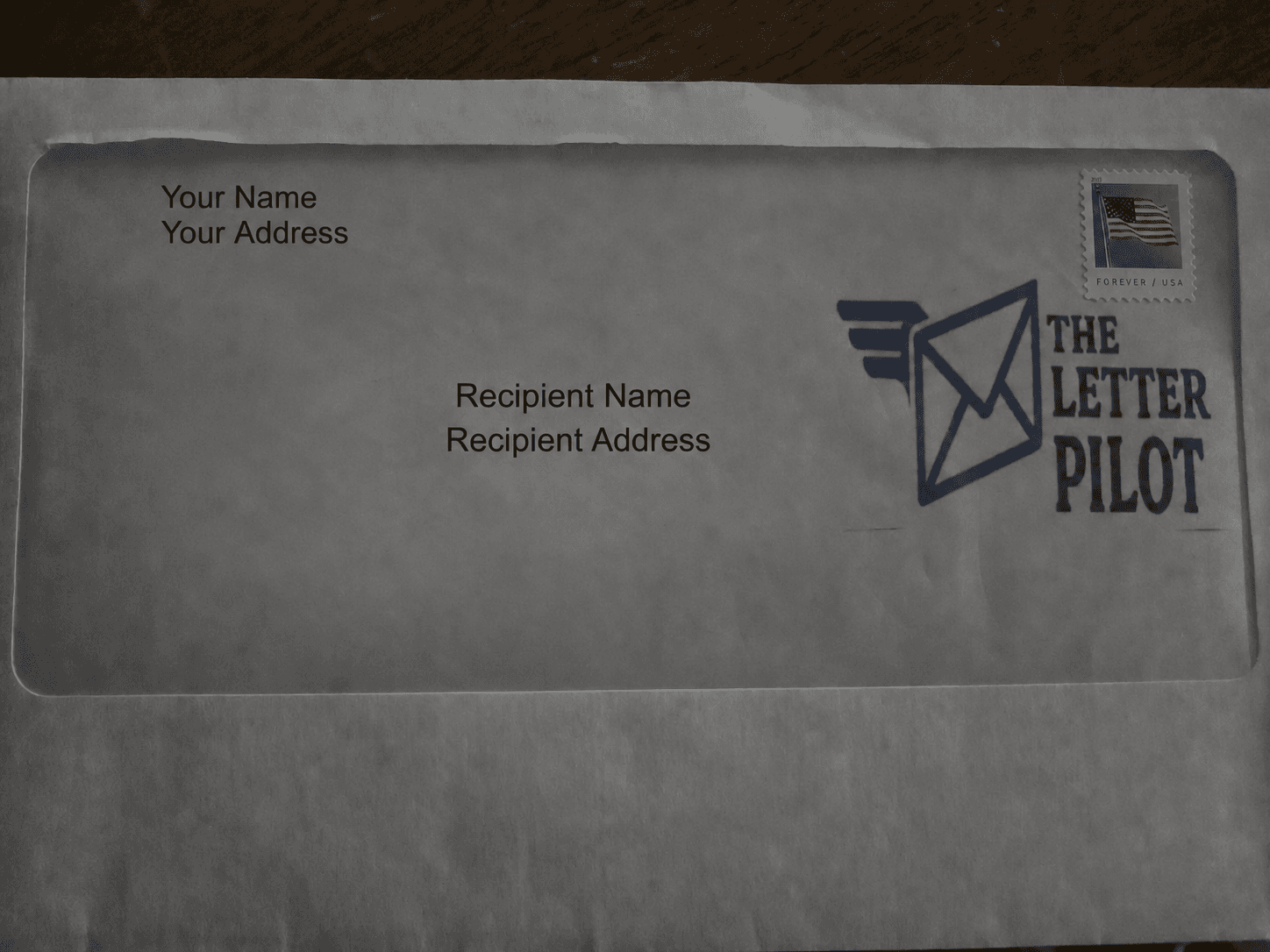
How to Address an Envelope
Put your return address in the upper-left corner, the recipient address in the center, and postage in the upper-right corner. Here is the straightforward USPS-friendly format.
Read guide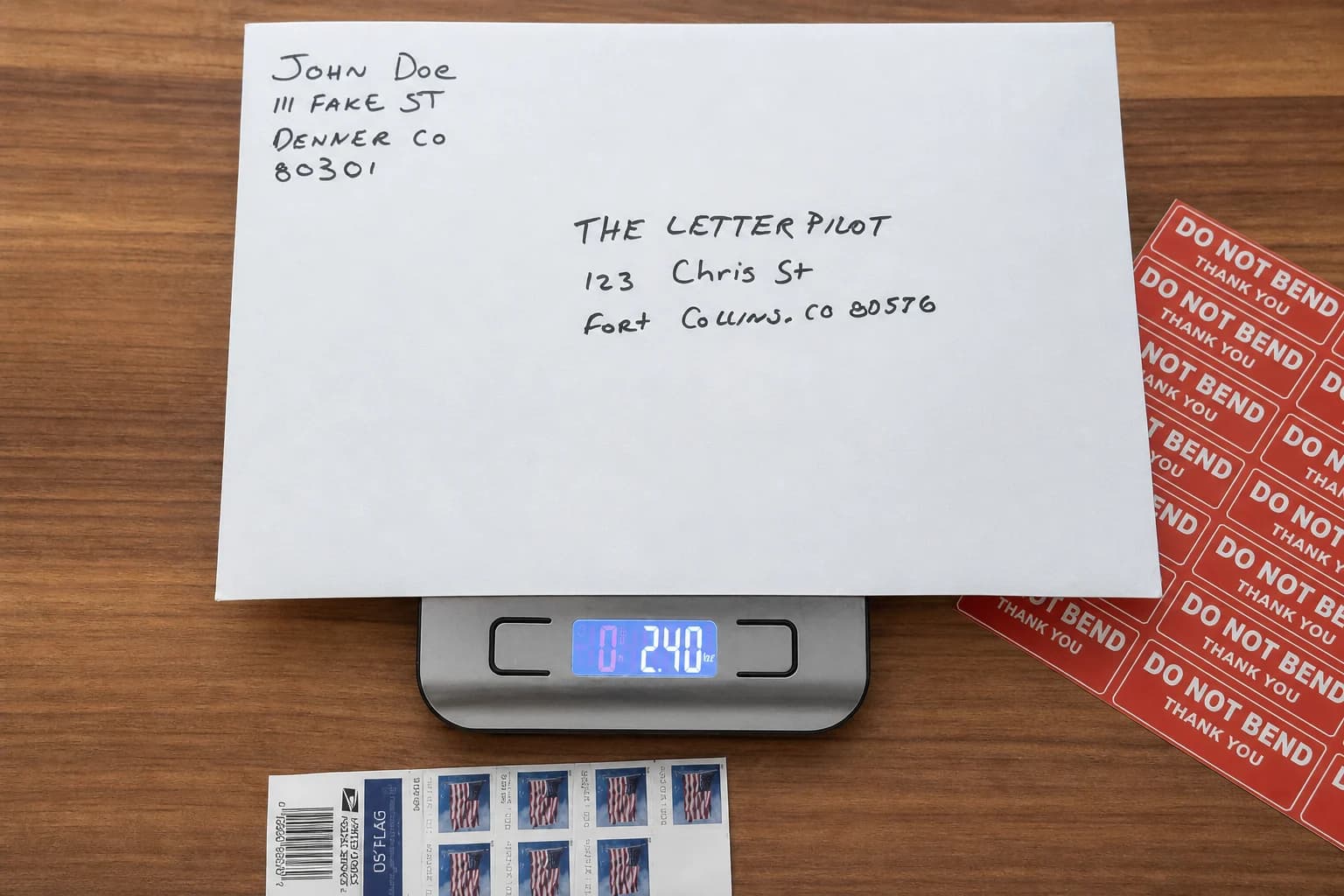
USPS guide
How Many Stamps Do I Need? USPS Stamp Calculator by Weight and Envelope Type
Use the USPS stamp calculator to figure out how many Forever or additional-ounce stamps to use by weight and envelope type. Need dollar postage rates instead? See 2026 USPS postage prices.
Read guide
USPS guide
How to Write a Postcard: Steps and Message Examples
Not sure what to write on a postcard? We'll cover some ideas.
Read guide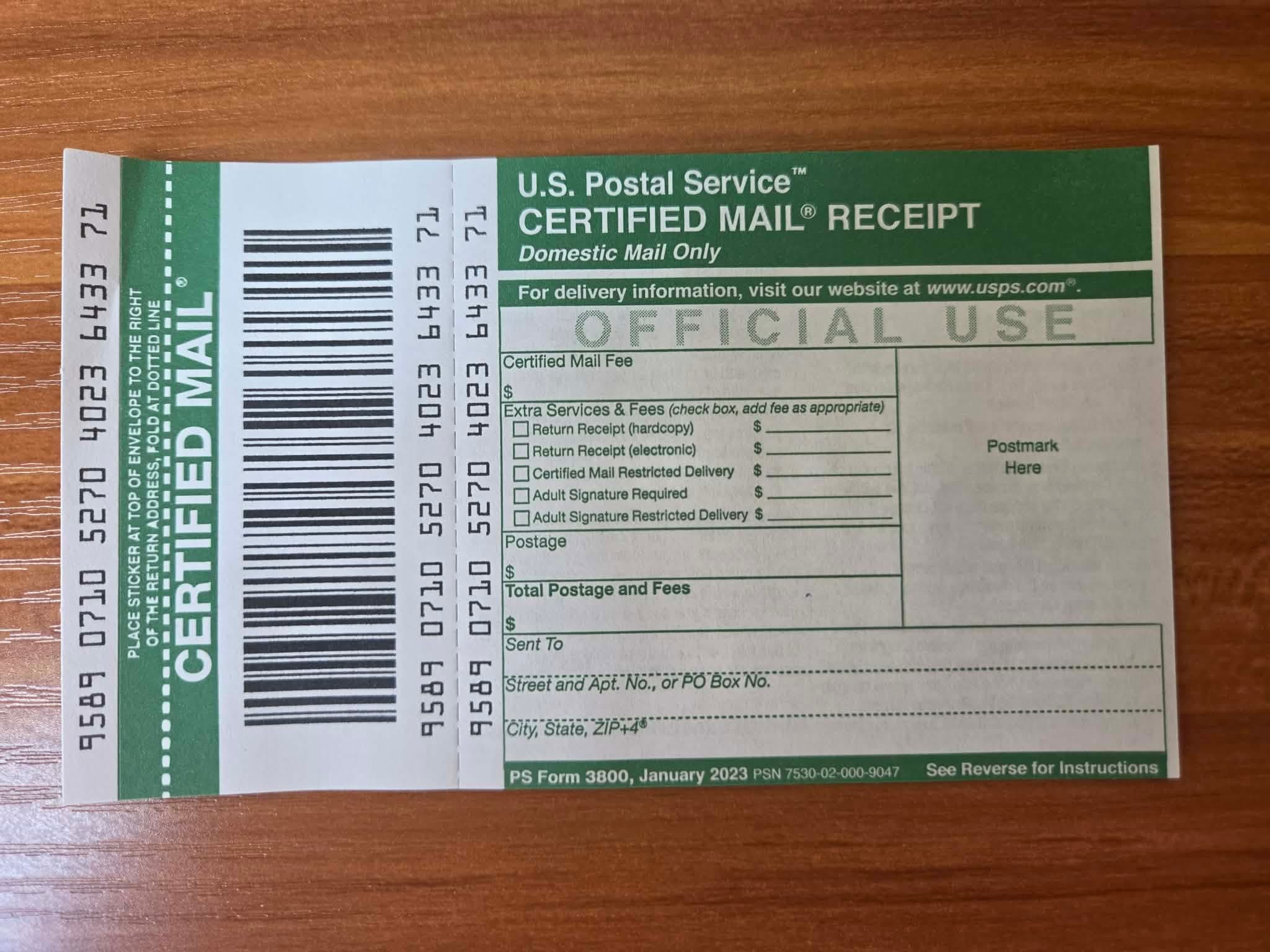
USPS guide
How to Write a Certified Letter (Format & Examples)
Learn how to write a certified letter with the correct format, sample wording, a complete example, and a reusable template for important notices.
Read guide