
How to Address a Letter to a Judge (Envelope, Salutation, Sample Letter)
Quick Answer: How to Address a Letter to a Judge
Envelope
The Honorable [Full Name][Court Name]
[Court Address]
[City, State ZIP Code]
Salutation
Dear Judge [Last Name]:
Before you send it
If your letter concerns a pending case, do not send it privately to the judge. Follow the court’s instructions or submit it through your attorney or the clerk using the required filing procedure.
We’ve been very fortunate at The Letter Pilot and have never personally had to address or mail a letter to a judge. We have had clients reach out with questions about formatting and how to get mail to a judge. It’s important to address the letter correctly, but it’s also important to know when you should send a letter to a judge, since it isn’t always appropriate. This guide covers the correct format, appropriate reasons for writing, and whether your letter should be mailed or formally filed.
When Is a Letter to a Judge Appropriate?
You should really only write a letter to a judge when you’re requested to do so. I’d let an attorney advise you before blindly writing a letter. A couple of common examples include:
- A character reference submitted according to the defense attorney’s or court’s instructions
- A victim impact statement submitted through the prosecutor, victim advocate, or court
- Non-case correspondence that the court permits to be sent to the judge’s chambers
What Is Ex Parte Communication?
Ex parte is Latin for “from one side.” An ex parte communication occurs when one party contacts the judge about a pending case without the other parties knowing or having an opportunity to respond. Judges generally cannot consider private letters, emails, or phone calls about the case.
Limited exceptions may apply to scheduling, administrative, emergency, or other communications authorized by court rules. If your message concerns a pending case, give it to your attorney or follow the court’s required filing and service procedures.
How to Address the Envelope
Use the judge’s official courthouse mailing address, which you can find on the court’s website.
The Honorable [Judge’s Full Name]
[Official Title, if needed]
[Court Name]
[Court Address]
[City, State ZIP Code]
Place your return address in the upper-left corner. See our guide to addressing an envelope for the standard placement of each address.
Salutation and Closing
For most judges, use:
Dear Judge [Last Name]:
Match the salutation to the official’s title when necessary:
- Dear Chief Judge [Last Name]:
- Dear Magistrate Judge [Last Name]:
- Dear Justice [Last Name]:
- Dear Chief Justice [Last Name]:
End the letter with:
Respectfully,
[Your Signature]
[Your Printed Name]
Letter Content Guidelines
Keep the letter focused on its permitted purpose. Include:
- Your full name and contact information
- The date
- The case name and number, if required
- A clear explanation of why you are writing
- Specific information you personally know
- Your signature and printed name
Use a respectful, professional tone. Do not include threats, personal attacks, exaggerated praise, or claims you cannot support.
If you want the judge to issue an order or take action in a pending case, an ordinary letter is generally not the proper method. Follow the court’s procedures for filing a motion, notice, or other required document.
Character Reference Letters
A character reference may be requested before someone is sentenced. Follow the submission instructions provided by the defendant’s attorney or the court rather than mailing it directly to the judge.
A useful character letter should:
- Explain who you are and how you know the defendant
- Describe specific conduct you have personally observed
- Be truthful and avoid exaggerated praise
- Acknowledge the seriousness of the situation without disputing the case
- Remain concise and respectful
Do not attack the victim, challenge the conviction, or tell the judge what sentence must be imposed.
Sample Character Letter to a Judge
[Your Full Name]
[Your Address]
[City, State ZIP Code]
[Phone Number or Email]

[Date]

The Honorable [Judge’s Full Name]
[Court Name]
[Court Address]
[City, State ZIP Code]

Re: [Defendant’s Full Name], Case No. [Case Number]

Dear Judge [Last Name]:

My name is [your name], and I have known [defendant’s name] for
[length of time] as [explain your relationship].

[Describe one or two specific examples of the person’s character,
responsibilities, conduct, or efforts to make positive changes.]

I understand the seriousness of this matter and appreciate the
court’s consideration of this information.

Respectfully,

[Your Signature]
[Your Printed Name]
Give the completed letter to the defendant’s attorney unless the court provides different instructions.
Mailing a Letter Versus Filing a Document
Mailing a letter to the courthouse does not necessarily make it an official court filing. A filing must be submitted and accepted according to the court’s rules, which may require electronic filing, delivery to the clerk, service on the other parties, or specific forms.
Certified Mail can provide mailing and delivery records, but it does not prove that the court accepted the document or that a filing deadline was met. Follow the court’s filing instructions first. If paper mail is permitted, keep a copy of the document and your mailing records.
See our guide to sending a Certified Letter for information about USPS delivery records.
Mailing an Approved Letter
If the court’s instructions allow you to send the letter by mail, The Letter Pilot can print and send it by First-Class Mail or Certified Mail. Certified Mail gives you a mailing and delivery record, but it does not prove that the court accepted the letter as a filing.
Sources
- U.S. Courts: Code of Conduct for United States Judges: Ex parte communication rules and limited exceptions for certain authorized communications.
- U.S. Bankruptcy Court, Central District of Illinois: Guidelines for Communicating with the Court: Private communications with a judge and the distinction between a letter and a formal court filing.
- U.S. Courts: Electronic Filing (CM/ECF): How pleadings, motions, petitions, and other case documents are formally filed in federal court.
- Maryland Federal Public Defender: Writing a Character Letter: Addressing a character letter, describing personal knowledge, and submitting it through the defendant’s attorney.
- U.S. Courts OSCAR: Recommender Resources: Judge-address fields, recommendation-letter templates, and the “Dear Judge [Last Name]” salutation.
- USPS PS Form 3800: Official Certified Mail receipt and proof-of-mailing information.
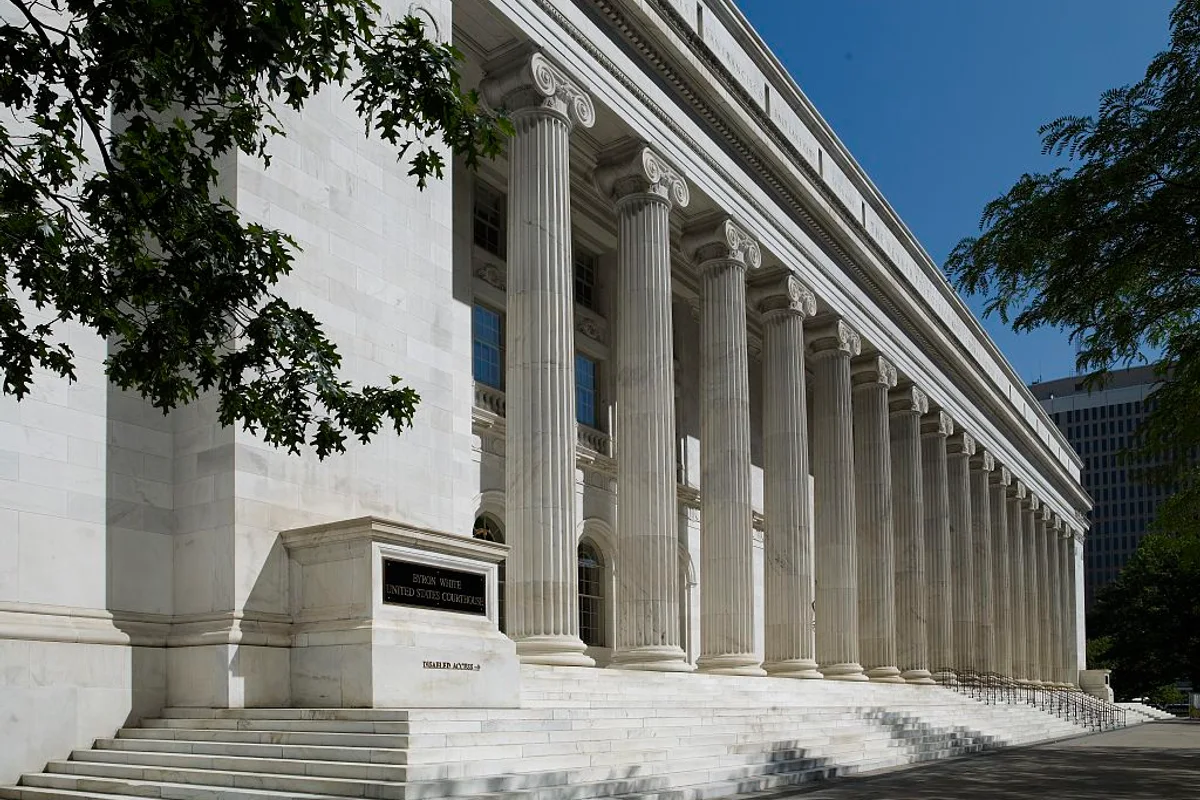
- Library of Congress: Byron R. White U.S. Courthouse: Hero photograph by Carol M. Highsmith. The Library of Congress lists no known restrictions on publication.
More USPS guides
USPS guide
How to Mail Sensitive Documents Safely
Learn how to mail sensitive documents safely, choose USPS tracking or proof of delivery, protect private information, and keep useful mailing records.
Read guide
USPS guide
How to Mail DMV Paperwork: 50-State DMV Checker
Use our DMV checker for all 50 states and DC to find online options and mail-in guidance for registration renewals, replacement titles, and license renewals.
Read guide
USPS guide
Where to Mail IRS Tax Returns: Address Finder by State
Use our IRS mailing address finder to find where to send tax returns, amended returns, extensions, and payments by state, form, and delivery method.
Read guide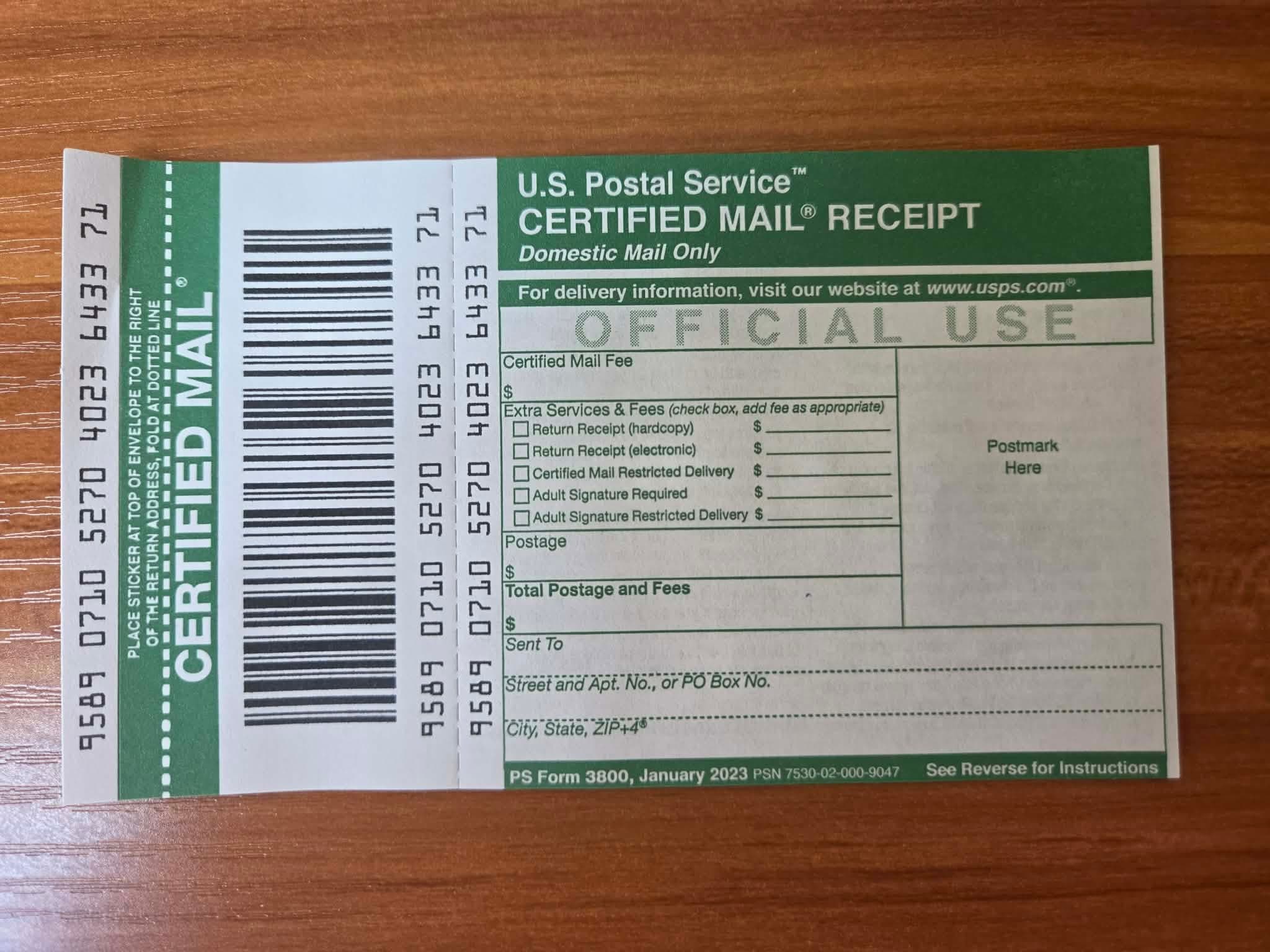
USPS guide
How to Write a Certified Letter (Format & Examples)
Learn how to write a certified letter with the correct format, sample wording, a complete example, and a reusable template for important notices.
Read guide
USPS guide
USPS Registered Mail: Cost, How to Send It & Delivery Time
Registered Mail starts at $20.90 plus postage. Fees depend on declared value and include applicable insurance up to $50,000. Learn how its security and delivery work.
Read guide