How to Address a Postcard: Where the Stamp and Address Go
The quick answer
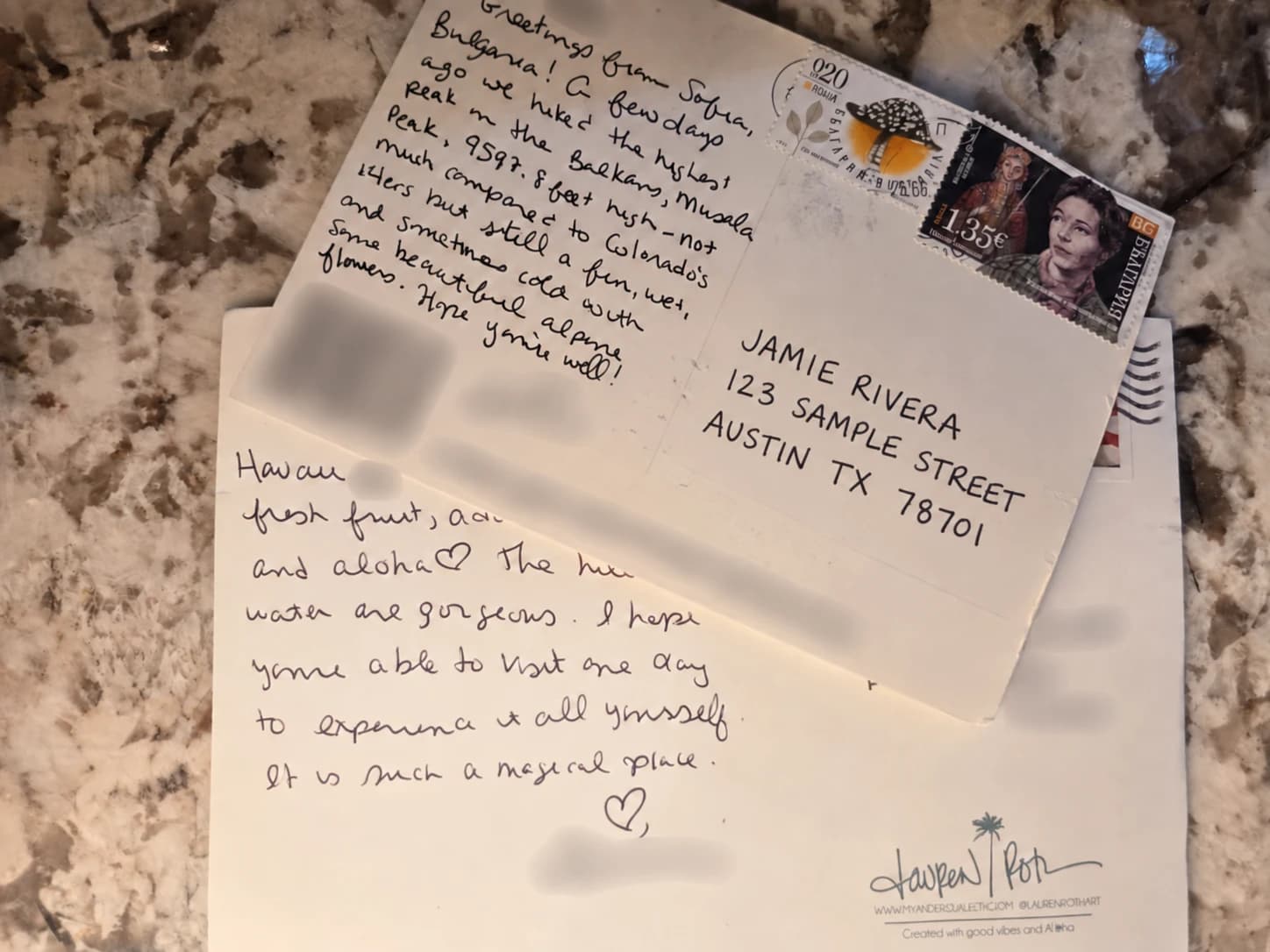
Write the mailing information on the back of the postcard. The recipient's address goes in the open area, the stamp goes in the upper-right corner, and your message goes in the remaining space. The picture side stays blank.
Most postcards have a divider down the middle. Write your note on the left and the delivery address on the right. If there is no divider, keep the right half clear for the address and stamp.
Use the back, not the picture side
Start by finding the side with the artwork. That is the front. Turn it over before you write anything for mailing.
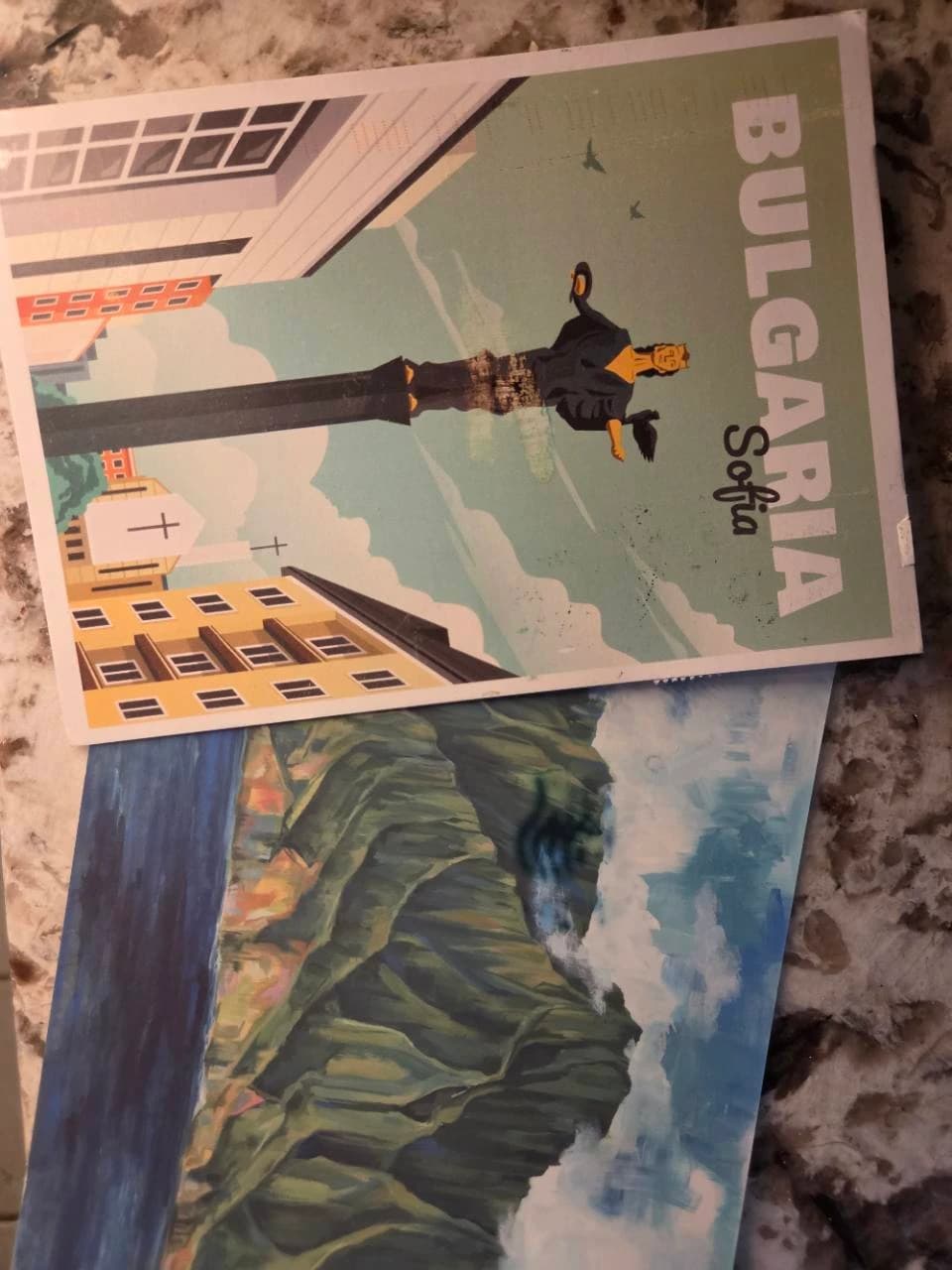
Do not put the delivery address on top of the artwork unless the card was designed that way. USPS needs a clear address area that will not be covered by the stamp or your note.
Write the address on the right side
Use the same basic address format you would use on an envelope. Print clearly and keep it in the card's address area.
SAMPLE POSTCARD ADDRESS
42 SAMPLE STREET
ANYTOWN CA 00000
The person's name goes first, then the street address, then the city, state, and ZIP Code. If the card has a printed divider, stay to the right of it. Keep the upper-right corner open for the stamp.
Need to verify a ZIP Code before you send it? Use the ZIP+4 lookup.
Put the stamp in the upper-right corner
Put a postcard stamp in the upper-right corner of the back. Some cards print a small box that says where it belongs. Use that box if there is one.
Do not place the stamp over the address, a divider line, or a printed barcode area. If the postcard has no printed guide, leave enough space around the stamp so the rest of the address remains easy to read.
How much postage does a postcard need?
For a standard rectangular postcard mailed within the United States, current USPS postcard postage is $0.65. A postcard stamp covers that amount.
If all you have is a Forever stamp, that is fine too. It pays $0.82, which is more than the postcard rate, so it still covers a standard domestic postcard. USPS does not give change for the difference.
The postcard price only applies to cards that are between 5 and 6 inches long, 3½ and 4¼ inches high, and between 0.007 and 0.016 inch thick. A square card, oversized card, or thick handmade card does not get the postcard price.
For anything outside those limits, check the postage calculator or take one finished card to the Post Office. International postcards use different postage.
Quick check before you send it
- The picture side has no delivery address.
- The recipient's name and address are clear on the back.
- The stamp is in the upper-right corner.
- The card is rectangular and within postcard size limits, or you checked the correct postage.
- Your message does not run into the address area.
Sources
More USPS guides
USPS guide
How to Address an Envelope
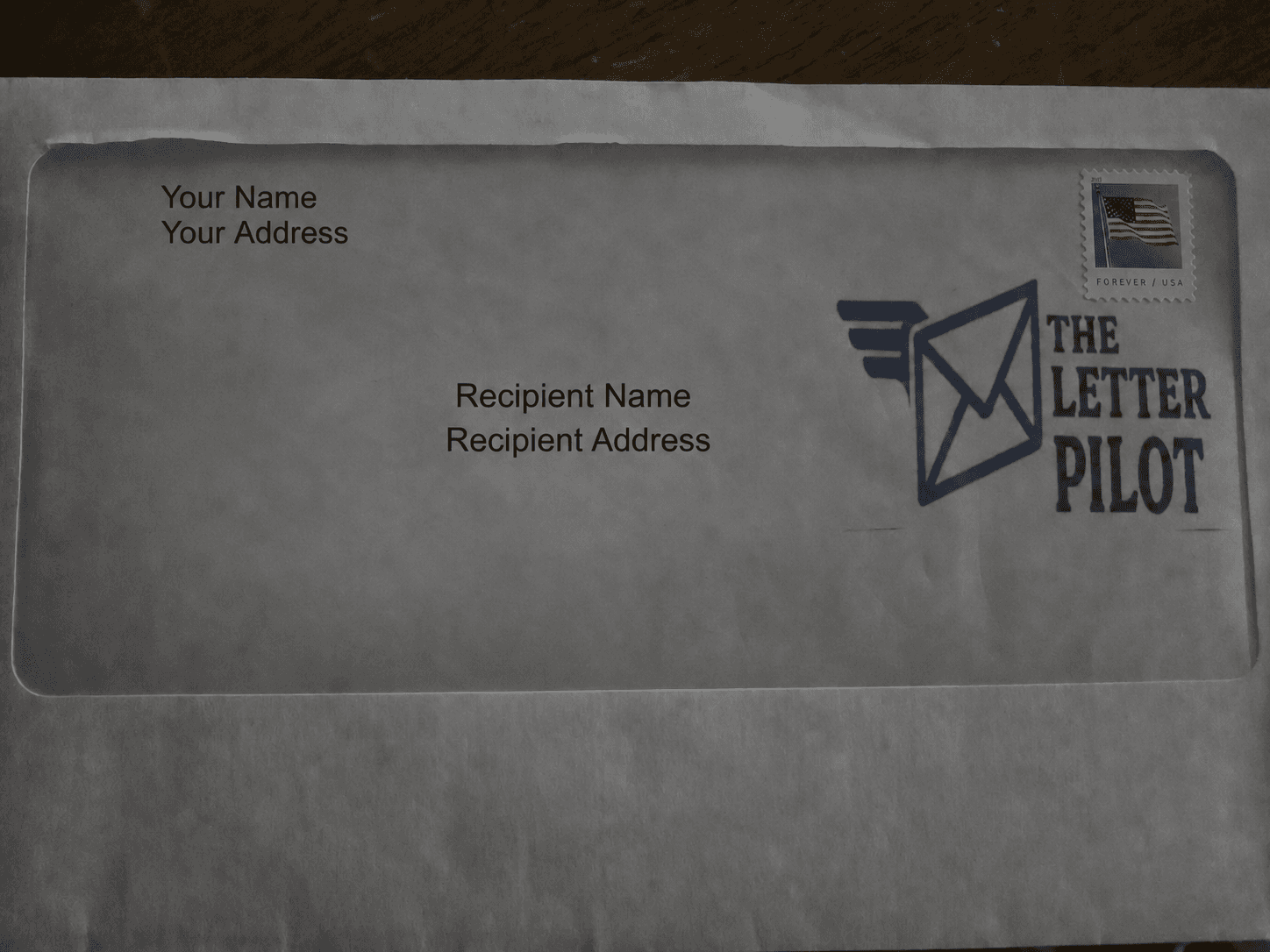
Put your return address in the upper-left corner, the recipient address in the center, and postage in the upper-right corner. Here is the straightforward USPS-friendly format.
Read guide
USPS guide
How to Send a Self-Addressed Stamped Envelope
A self-addressed stamped envelope is an envelope someone can use to mail something back to you. Here is how to prepare it without mixing up the two addresses.
Read guide
USPS guide
How to Address a PO Box on an Envelope
Put the recipient name first, the PO Box number on the next line, and the city, state, and correct PO Box ZIP Code on the final line.
Read guide
USPS guide
How to Address Military Mail (APO, FPO, and DPO)
Use the correct APO, FPO, or DPO military address format. Learn where the name, unit, AA/AE/AP code, ZIP Code, postage, and customs form belong.
Read guide
USPS guide
Apt vs Unit vs Suite: USPS Secondary Address Format Examples
Use this guide before mailing when you need the right apartment, unit, suite, or floor abbreviation and placement. Includes USPS-friendly examples for secondary address formatting.
Read guide