
How to Extend USPS Mail Forwarding (2025 Guide)
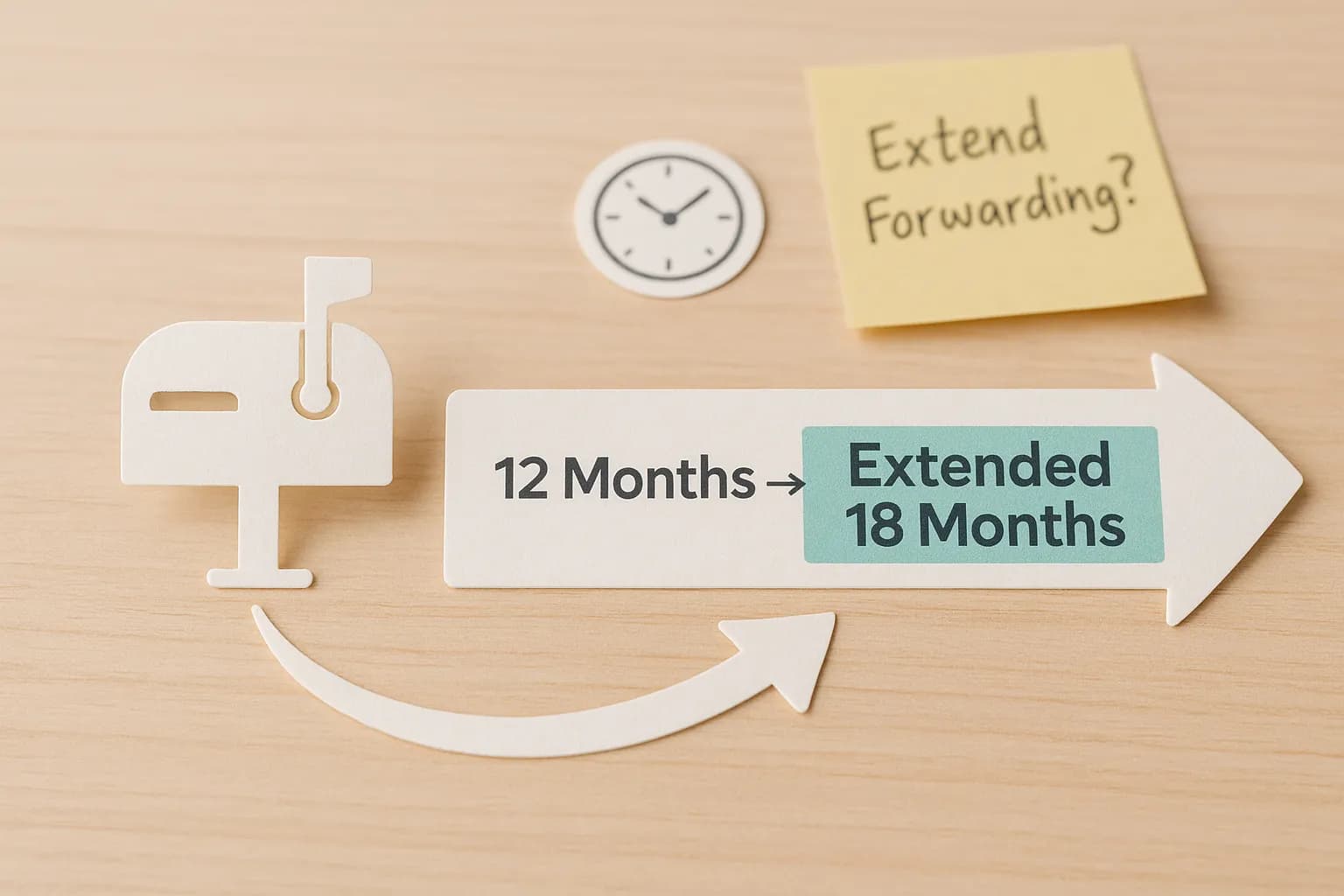
USPS mail forwarding expires after 12 months. If you still need mail redirected to your new address, this guide explains your options—including USPS Extended Mail Forwarding, Premium Forwarding Service, and free alternatives.
When you want to send a letter without going to the post office, upload your document and we take care of the rest.
Quick Answer
Free forwarding cannot be extended beyond 12 months. Your options are:
- • Best option: Update your address with all senders (free)
- • Paid USPS option: Extended Mail Forwarding (add 6–18 more months through USPS)
- • Premium option: Premium Forwarding Service (~$28/week)
- • Alternative: Virtual mailbox service
Why Mail Forwarding Expires
USPS designed mail forwarding as a temporary service to help during a move, not as a permanent mail redirection solution. The 12-month limit exists because:
- • Processing costs: Forwarding mail costs USPS time and resources
- • Encourages updates: Senders should have your new address by then
- • Addresses change: Extended forwarding chains become unreliable
USPS Extended Mail Forwarding (Paid Add-On)
The Official USPS Extension Option
USPS now offers Extended Mail Forwarding as a paid add-on to your Change of Address. This extends your standard 12-month forwarding period for an additional fee.
How It Works
- • Standard forwarding: 12 months (included with any COA)
- • Extended Mail Forwarding: Add 6, 12, or 18 extra months for a flat fee (up to 30 months total)
- • How to add: Select when filing your COA, or add later through Manage My Move
- • Important: This doesn't make forwarding free longer—it's a paid extension
Note: Extended Mail Forwarding pricing varies. Check USPS.com when filing or editing your Change of Address for current fees and availability.
Option 1: Update Your Address (Best Option)
Free and Permanent
The best solution is to update your address with every company, organization, and person who sends you mail. After updating, you don't need forwarding. For important notifications, consider sending address update letters via Certified Mail for proof of delivery.
Priority Address Updates
Financial
- • Banks and credit unions
- • Credit card companies
- • Investment accounts
- • Loan servicers
Government
- • IRS (Form 8822)
- • Social Security
- • DMV / Driver's license
- • Voter registration
Insurance
- • Health insurance
- • Auto insurance
- • Home/renters insurance
- • Life insurance
Other
- • Employer/HR
- • Medical providers
- • Subscriptions
- • Online shopping accounts
Option 2: Premium Forwarding Service
USPS Premium Forwarding Service Residential (PFSR)
A paid USPS service that collects all your mail and ships it to you weekly via Priority Mail.
| Fee Type | Cost |
|---|---|
| Enrollment Fee | ~$24.70 online / ~$26.85 at Post Office |
| Weekly Shipping Fee | ~$27.80 per shipment |
| Monthly Estimate | ~$111-$139/month |
Prices change periodically—always confirm on USPS.com for current rates.
Pros
- • All mail types included (packages too)
- • Weekly Priority Mail shipment
- • Can enroll for up to 1 year
- • Tracking for each shipment
Cons
- • Expensive ($100+/month)
- • Mail arrives weekly, not daily
- • Maximum 1 year enrollment
- • Best to enroll while mail delivery is still active at original address
How to Enroll
- Visit your local post office
- Request Premium Forwarding Service enrollment
- Provide valid ID and new address
- Pay enrollment fee
- Choose start date and duration
Option 3: Virtual Mailbox Service
How Virtual Mailboxes Work
Third-party services like Earth Class Mail, Traveling Mailbox, or PostScan Mail receive your mail at their address, scan it, and forward items you request.
- • Get a real street address (not PO Box)
- • View scanned images of mail online
- • Choose what to forward, shred, or recycle
- • Works long-term (no 12-month limit)
- • Typical cost: $15-$50/month
See our mail scanning service guide for more information.
What Happens When Forwarding Expires
After your USPS mail forwarding period ends (including any Extended Mail Forwarding), most First-Class Mail is returned to sender, usually with your new address on a yellow label.
| Mail Type | What Happens |
|---|---|
| First-Class Mail | Returned to sender for a limited period with new address label |
| Packages | Returned to sender |
| Standard/Marketing Mail | Usually not forwarded or returned; may be discarded |
| Periodicals | Forwarding ends at ~60 days; then may be discarded |
Silver lining: When First-Class Mail is returned to sender, USPS prints your new address on a yellow label. This helps senders update their records automatically.
Frequently Asked Questions
Can I extend USPS mail forwarding for free?
No, standard mail forwarding cannot be extended beyond 12 months for free. However, USPS offers paid Extended Mail Forwarding (add 6, 12, or 18 extra months) through Manage My Move. You can also use Premium Forwarding Service or file a new Change of Address if you moved again. The best free option is to update your address with all senders.
How much does Premium Forwarding Service cost?
Premium Forwarding Service Residential (PFS-Residential) has a non-refundable enrollment fee (currently around mid-$20s) plus a weekly shipment fee (high-$20s per week). Mail is accumulated and shipped to you weekly via Priority Mail. Maximum enrollment is 1 year. Check USPS.com for the latest official pricing.
What happens when mail forwarding expires?
After your forwarding period ends (including any Extended Mail Forwarding), USPS typically returns First-Class Mail to sender for a limited period with a yellow label showing your new address. Standard mail and marketing mail is usually not forwarded or returned and may be discarded. The sender will learn your new address from the returned mail.
Need to Send Important Mail?
Certified Mail provides tracking and proof of delivery or attempted delivery, even if the recipient's address has changed.