
Certified vs Registered Mail for Legal Notices (2025 Guide)
Quick Answer: Which to Use for Legal Notices
- For most legal notices: Certified Mail with Return Receipt
- For irreplaceable originals: Registered Mail
- Both are legally valid: Courts generally accept either as proof of service
- Main difference: Security and chain of custody, not legal validity
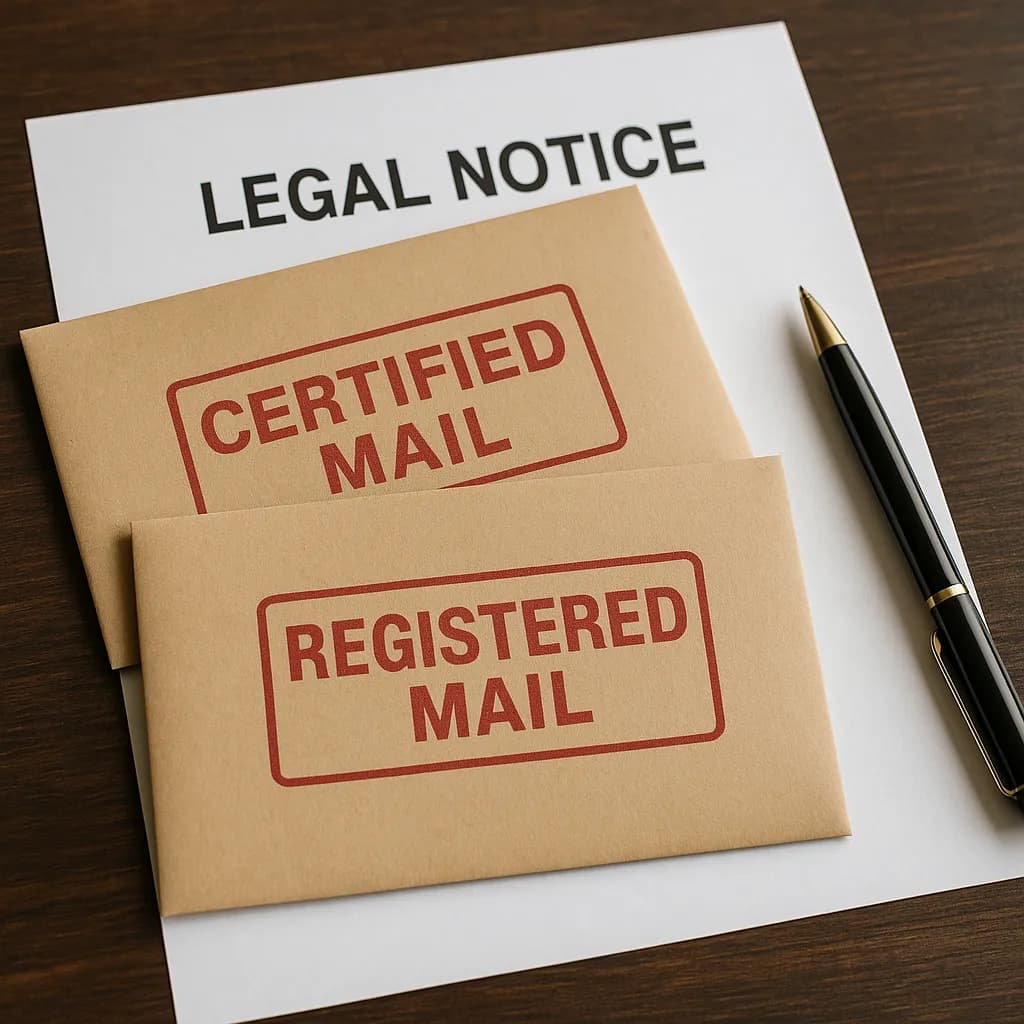
When sending legal documents, many people wonder whether they should use certified mail or registered mail. While both USPS services provide proof of mailing and proof of service, they serve different purposes. This guide on certified vs registered mail for legal notices compares costs, features, and legal validity to help you choose the right service. For comprehensive comparisons beyond legal use, see our certified mail vs registered mail guide.
Prefer to mail a letter online? Upload your PDF and we handle printing, postage, and USPS handoff.
In This Guide
Key Differences at a Glance
| Feature | Certified Mail | Registered Mail |
|---|---|---|
| Primary Purpose | Proof of delivery | Maximum security |
| Chain of Custody | Basic tracking | Every handler documented |
| Insurance Available | Via mail class (separate) | Available (up to $50,000) |
| Delivery Speed | 3-5 business days | 7-10+ business days |
| Cost (approximate) | ~$10-12 | ~$15-50+ |
| Legal Validity | Equal | Equal |
Certified Mail for Legal Notices
Certified mail is the standard choice for legal notices because it provides:
Proof of Mailing
The PS Form 3800 receipt shows the date you mailed the document and the recipient's address. This proves you sent the notice by a specific date.
Delivery Tracking
Unique tracking number lets you verify when the document was delivered. USPS records the delivery date and time.
Return Receipt Option
The green card (PS Form 3811) provides a physical signature from the recipient, creating powerful proof they received your notice.
Cost-Effective
At around $10-12 for a letter with return receipt, certified mail provides sufficient proof for most legal purposes without excessive cost.
When Certified Mail is the Right Choice
- • Demand letters and pre-litigation notices
- • Eviction and landlord-tenant notices
- • Contract cancellation notices
- • Insurance claim correspondence
- • Government agency correspondence
- • Serving court documents (after initial service)
- • Any situation where you need proof of delivery
Registered Mail for Legal Documents
Registered mail provides the highest level of security and is appropriate when:
Complete Chain of Custody
Every person who handles the mail item signs for it. This creates an unbroken record from mailing to delivery.
Physical Security
Registered mail travels separately from regular mail in locked containers. It never sits in bins with regular mail.
Insurance Coverage
Can insure items up to $50,000. Essential for sending valuables or documents with intrinsic value.
Evidence of Non-Tampering
Sealed under specific requirements. Any tampering would be documented and visible.
When Registered Mail is the Right Choice
- • Original signed contracts (only copy in existence)
- • Original powers of attorney
- • Original wills or estate documents
- • Stock certificates or bearer instruments
- • Evidence that must show chain of custody
- • Documents with high monetary value
- • International shipments to high-risk areas
Which to Use: Decision Guide
Use this decision tree to choose the right service:
Choose Your Service
Q: Is this an irreplaceable original document?
Yes: Use Registered Mail
No: Continue to next question
Q: Does the document have significant monetary value?
Yes: Use Registered Mail (with appropriate insurance)
No: Continue to next question
Q: Do you need to prove chain of custody (who handled it)?
Yes: Use Registered Mail
No: Continue to next question
Q: Do you just need proof that you sent it and they received it?
Yes: Use Certified Mail with Return Receipt
Legal Validity: Both Are Equal
A common misconception is that registered mail is "more legal" than certified mail. This is not true. For guidance on proper methods, see our guide on how to prove you mailed something.
What Courts Care About
- Proof of mailing: Both provide this
- Proof of delivery: Both provide this (with return receipt)
- Recipient signature: Both can provide this
- Tracking records: Both provide this
For proving that you sent a document and the recipient received it, certified mail is generally treated as equally valid as registered mail in most courts. Always check your jurisdiction's specific requirements.
The extra features of registered mail (chain of custody, insurance, maximum security) are valuable when needed, but they do not make the service more "legal" in the eyes of a court.
Cost Comparison (2025)
Approximate costs based on USPS 2025 rates:
| Service Component | Certified Mail | Registered Mail |
|---|---|---|
| Base Fee | ~$5.30 | ~$15.00+ |
| Return Receipt | ~$4.40 | ~$4.40 |
| First-Class Postage | ~$0.78 | ~$0.78 |
| Insurance (optional) | Available via mail class | Available, varies by value |
| Typical Total | ~$10-12 | ~$20-50+ |
Certified mail costs roughly half as much as registered mail while providing the same legal proof of delivery. This is why it is the standard choice for legal notices. These are approximate examples; always confirm current USPS rates before mailing.
Common Legal Scenarios
Demand Letter
Recommended: Certified Mail with Return Receipt
You are sending a copy of a letter you wrote. The original stays in your file. Certified mail provides all the proof you need at a reasonable cost.
Eviction Notice
Recommended: Certified Mail with Return Receipt
Standard practice for eviction notices. Check your state's specific requirements, but certified mail satisfies most jurisdictions.
Original Signed Contract
Recommended: Registered Mail
If this is the only original and cannot be replaced, registered mail's security and insurance are worth the extra cost.
Court Filing
Recommended: Certified Mail with Return Receipt
Standard for court filings by mail. Check your court's specific rules. You are sending documents the court will keep, not irreplaceable originals.
Notice of Intent to Sue
Recommended: Certified Mail with Return Receipt
Similar to demand letters. You need proof they received notice; certified mail provides exactly that.
Original Will to Attorney
Recommended: Registered Mail
Original wills cannot be replaced. The chain of custody and security of registered mail protect this irreplaceable document.
Send Legal Notices by Certified Mail Online
Skip the post office. Upload your legal notice and we print and send it via USPS Certified Mail with Return Receipt. Same-day processing, full tracking, and proof of delivery.
Send Certified Mail OnlineFAQs
Should I use certified or registered mail for legal notices?
For most legal notices, certified mail with return receipt is the best choice. It provides proof of mailing and delivery at a reasonable cost. Registered mail is only necessary when you need maximum security or are sending irreplaceable original documents.
Is registered mail more legally valid than certified mail?
Generally, no. Both certified and registered mail are typically treated as equally valid for legal purposes. Courts generally accept either as proof of mailing and delivery. The difference is in security level and chain of custody documentation, not legal validity. However, always verify requirements for your specific jurisdiction.
Do demand letters need to be sent by registered mail?
No. Demand letters should be sent by certified mail with return receipt. This is standard practice and provides all the proof you need. Registered mail is unnecessary for demand letters and adds cost without additional legal benefit.
When should I use registered mail instead of certified?
Use registered mail when sending: irreplaceable original documents, items with high monetary value, documents requiring chain of custody evidence, or when maximum security is paramount. For routine legal notices, certified mail is sufficient.
Why does registered mail take longer?
Registered mail is handled separately from regular mail and each handler must sign for it. This additional security adds time to the delivery process, typically 7-10 business days compared to 3-5 for certified mail.
Can I add insurance to certified mail?
Certified mail itself does not include insurance, but you can add insurance separately through the underlying mail class (First-Class or Priority Mail). However, for most legal documents that can be reprinted, insurance is typically unnecessary. Registered mail is the better choice when you need built-in insurance for irreplaceable or high-value items.
Is certified mail enough for legal proof of service?
In many civil matters, certified mail with return receipt is generally sufficient proof of service by mail. It provides documented evidence of mailing date and delivery confirmation with signature. However, requirements vary by state and court, so always verify the specific rules for acceptable service methods in your jurisdiction.
Related Guides
- What is Certified Mail?
- What is Registered Mail?
- Certified Mail vs Registered Mail (Full Comparison)
- How to Mail Legal Documents Correctly
- How to Send a Demand Letter
- How to Fill Out PS Form 3800
Legal Disclaimer
This guide provides general information about mailing services for legal notices and is not legal advice. Requirements may vary by jurisdiction and document type. For advice about proper service methods for your specific legal matter, consult with a licensed attorney.
Tags: certified mail vs registered mail, legal notices, demand letter mailing, court documents, legal mail service, which mail service for legal notices, proof of service by mail, USPS legal mail