
Certified Mail vs Registered Mail for Valuables and Sensitive Documents (2026)
Quick Answer: Use Certified Mail when you mainly need proof of mailing and delivery for a normal important letter. Use Registered Mail when the item itself is high value, irreplaceable, or sensitive enough that extra chain-of-custody protection matters more than speed.
This page is the security-first comparison. If you want the broad service explainer, start with what Registered Mail is. If you are choosing between the two for lawsuits, notices, or proof-heavy business mail, see Certified vs Registered Mail for legal notices.
Certified Mail vs Registered Mail both give you tracking and delivery confirmation, but they solve different risk levels. Certified Mail is usually the practical choice for routine documents that only need proof. Registered Mail is the premium option for originals, valuables, and high-risk contents that benefit from tighter handling, detailed chain of custody, and more security along the route.
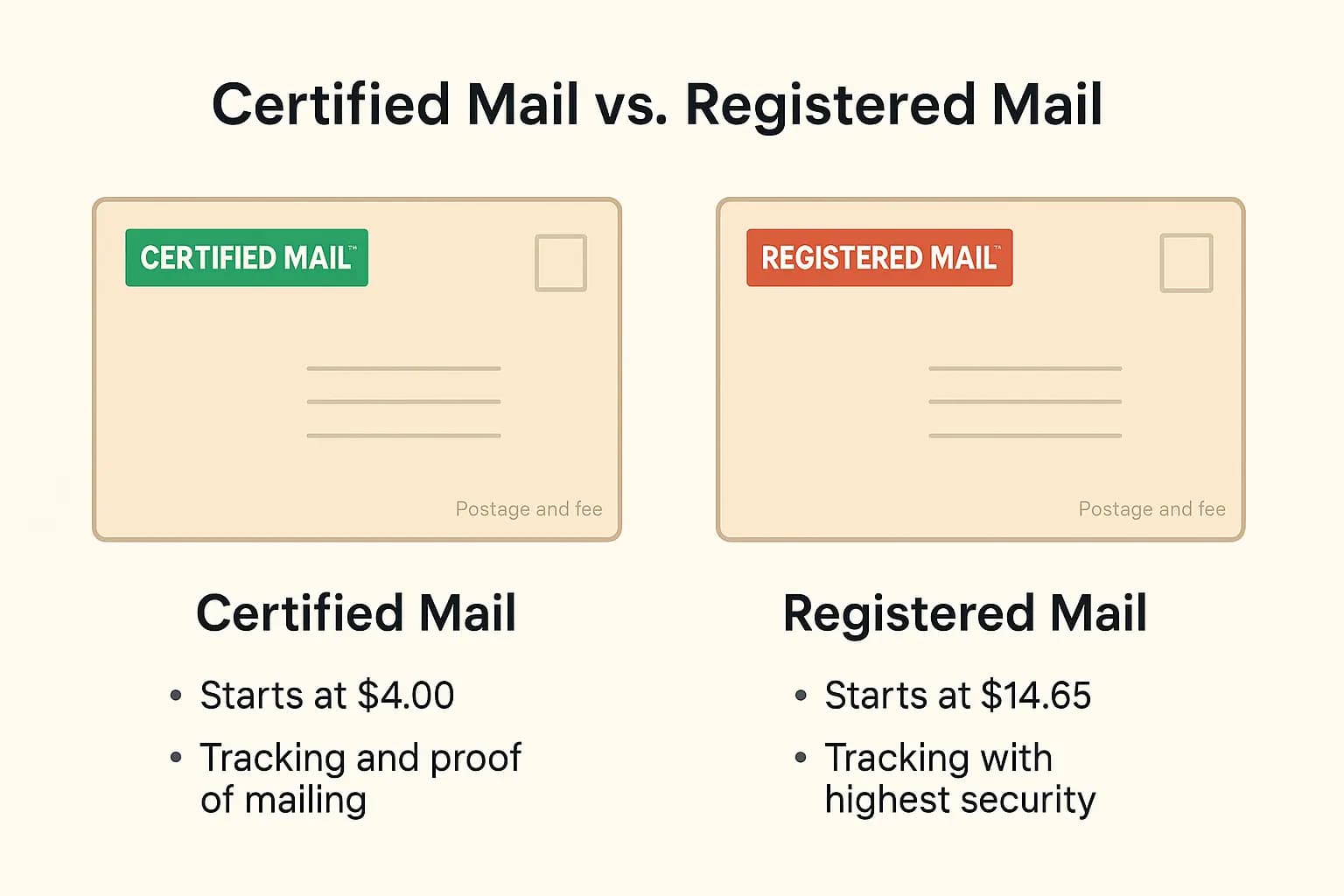
If you need to mail a physical letter without visiting the post office, you can also send letter online.
Table of Contents
- Quick Comparison: Certified vs Registered
- What is Certified Mail?
- What is Registered Mail?
- Cost Comparison 2026
- Security Level Differences
- Delivery Speed Comparison
- When to Use Each Service
- Frequently Asked Questions
- → What's the difference?
- → Which is more secure?
- → Is it worth the extra cost?
- → Is registered mail safer?
- → Which is faster?
- → Can I track both?
- → Which for legal documents?
Quick Comparison: Certified vs Registered Mail
| Feature | Certified Mail | Registered Mail |
|---|---|---|
| Base Cost | Small fee + postage | Higher cost (mid-teens+) |
| Delivery Time | 1-3 business days | 5-7 business days |
| Security Level | Standard (with regular mail) | Maximum (locked pouches) |
| Tracking | ✅ Yes | ✅ Yes (more detailed) |
| Proof of Delivery | ✅ Yes | ✅ Yes |
| Insurance Included | ❌ No (can add) | ✅ Up to $50 |
| Return Receipt | Small additional fee (optional) | Included |
| Best For | Legal notices, important documents | High-value items, maximum security |
Choose Certified Mail When:
- • You need proof of delivery
- • Cost is a primary concern
- • Faster delivery is important
- • Sending legal notices or contracts
- • Document has moderate importance
Choose Registered Mail When:
- • Maximum security is essential
- • Item has high monetary value
- • Sending irreplaceable documents
- • Insurance coverage is needed
- • Chain of custody matters
What is Certified Mail?
Certified Mail is a USPS service that provides proof of mailing and delivery confirmation. It's processed alongside regular mail but includes a unique tracking number and delivery record. For detailed information on how this service works, see our guide on what is certified mail.
Certified Mail Features
Included Services
- • Proof of mailing receipt
- • Unique tracking number
- • Online tracking updates
- • Delivery confirmation
- • Attempt notifications
Optional Add-ons
- • Return Receipt (additional fee)
- • Restricted Delivery (additional fee)
- • Insurance (varies by value)
- • Adult Signature (additional fee)
Pro tip: Send certified mail without visiting the post office using our online certified mail service.
How Certified Mail Works
- 1. Mail is marked with Certified Mail label and tracking number
- 2. Item travels with regular mail through USPS network
- 3. Delivery attempts are recorded and tracked online
- 4. Recipient signs for delivery (signature required)
- 5. Delivery confirmation is updated in tracking system
What is Registered Mail?
Registered Mail is the most secure mail service offered by USPS. Items are placed in locked pouches and tracked at every step of delivery with detailed chain-of-custody records. Unlike certified mail, registered mail requires signature confirmation at every transfer point.
Registered Mail Features
Security Features
- • Locked pouches during transport
- • Chain-of-custody documentation
- • Signature required at every step
- • Limited access by postal workers
- • Separate processing facilities
Included Services
- • Up to $50 insurance
- • Proof of mailing
- • Return receipt included
- • Detailed tracking
- • Signature confirmation
How Registered Mail Works
- 1. Item is sealed and locked in special Registered Mail pouch
- 2. Separate processing through secure USPS facilities
- 3. Every postal worker who handles item signs for custody
- 4. Detailed records maintained throughout delivery
- 5. Final delivery requires recipient signature and ID verification
Cost Comparison 2026
Understanding the cost difference between Certified and Registered Mail helps you budget appropriately for your mailing needs. The USPS certified vs registered mail pricing varies significantly based on service level. For detailed pricing information, see our complete Certified Mail cost breakdown and the full registered mail cost breakdown:
Certified Mail Costs
- Base ServiceSmall fee + postage
- Return Receipt (paper)Additional fee
- Return Receipt (electronic)Lower additional fee
- Restricted DeliveryHigher additional fee
- Total (basic)Affordable + postage
- Total (with receipt)Still budget-friendly
Registered Mail Costs
- Base Service (no insurance)Mid-teens range
- Low value itemsSame base cost
- Higher value itemsIncreases with value
- Premium protectionSignificantly higher
- Includes:Return receipt
- Insurance coverage
Cost Scenarios Example
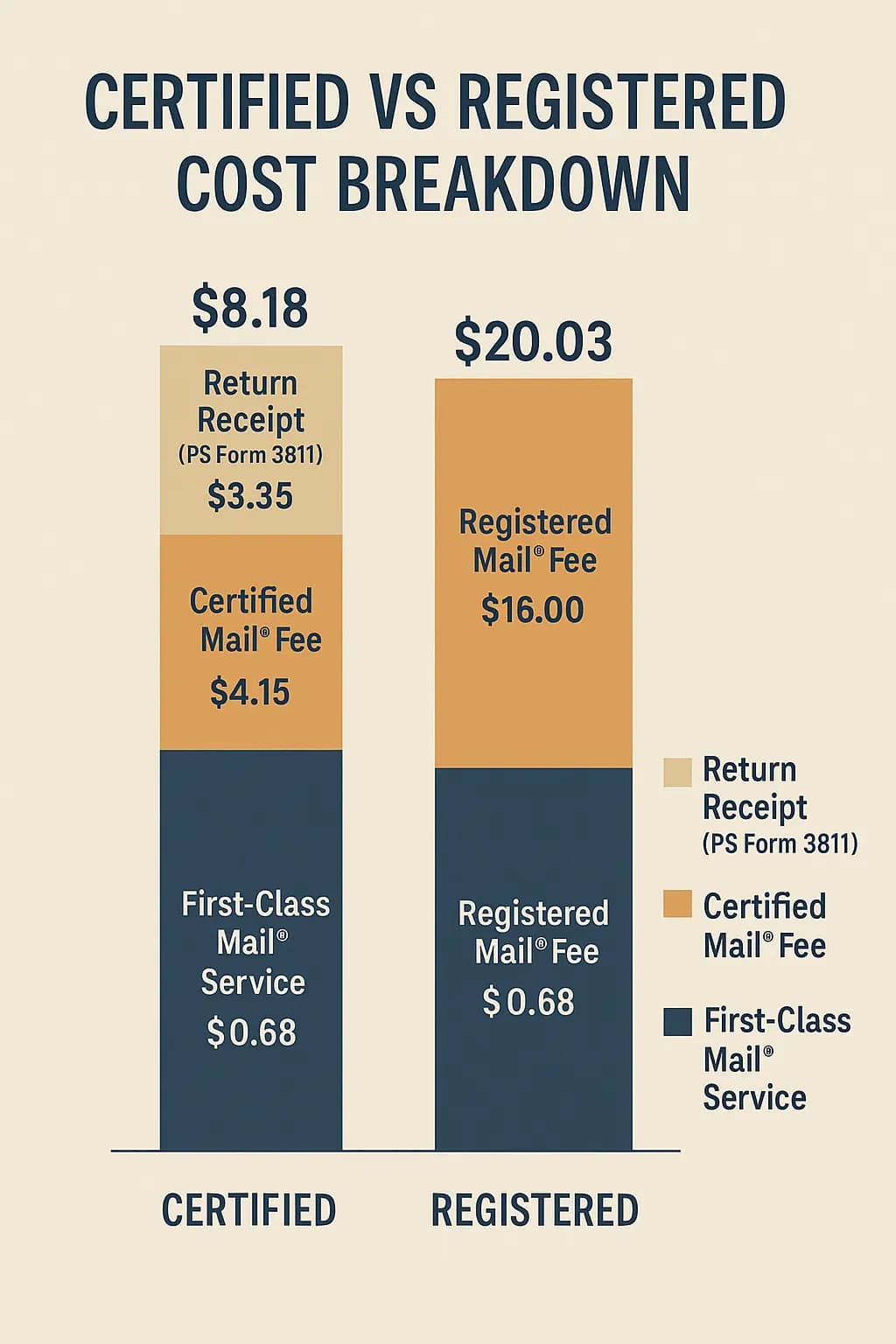
Security Level Differences
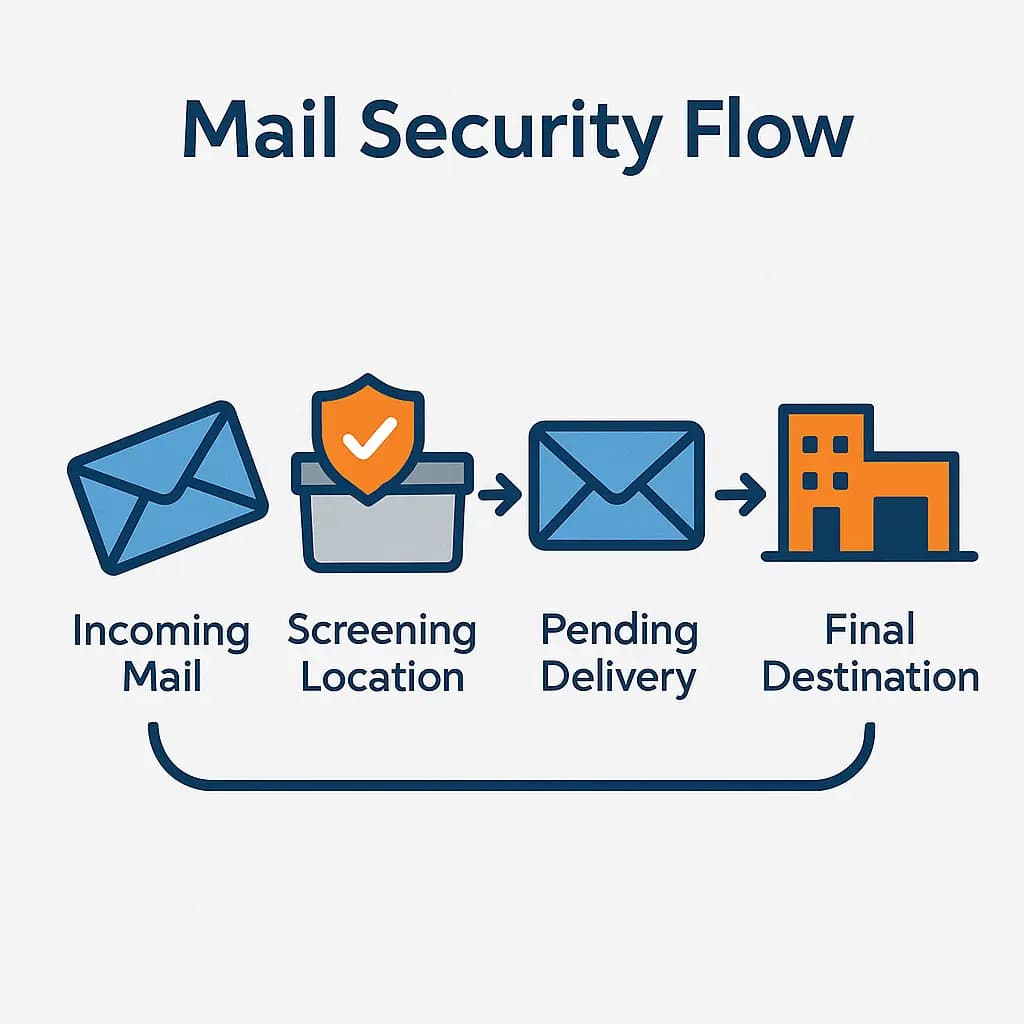
The main difference between Certified and Registered Mail security lies in how items are processed and protected during transport:
| Security Feature | Certified Mail | Registered Mail |
|---|---|---|
| Transport Method | With regular mail | Locked pouches only |
| Chain of Custody | Basic tracking | Every handler signs |
| Access Control | Standard postal workers | Authorized personnel only |
| Processing Facility | Regular postal facilities | Secure, separate facilities |
| Documentation | Delivery confirmation | Detailed custody records |
| Insurance Coverage | Optional (extra cost) | Included up to $50 |
🚨 Security Risk Assessment
Lower Risk Items (Certified Mail OK)
- • Legal notices and contracts
- • Tax documents and forms
- • Insurance claims
- • Medical records
- • Business correspondence
Higher Risk Items (Use Registered Mail)
- • Stock certificates
- • Bonds and financial instruments
- • Irreplaceable documents
- • High-value contracts
- • Legal evidence for court
Delivery Speed Comparison
Delivery time differences between Certified and Registered Mail are significant and should factor into your decision. If you need the full timing breakdown for the certified side, see how long does certified mail take.
⚡ Certified Mail Speed
- • Delivery: 1-3 business days
- • Processing: Same as regular mail
- • Transportation: Standard routes
- • Weekend: Saturday delivery included
- • Express option: Available with Priority
🐌 Registered Mail Speed
- • Delivery: 5-7 business days
- • Processing: Separate secure facilities
- • Transportation: Security-first routes
- • Weekend: No Saturday delivery
- • Express option: Not available
If weekend arrival matters, see our USPS Saturday delivery guide for the full rules on which mail classes move on Saturdays and which ones wait until Monday.
⏰ Why Registered Mail is Slower
- • Items must be processed at specialized secure facilities
- • Each transfer requires detailed documentation and signatures
- • Security protocols take precedence over speed
- • Limited to weekday processing and delivery
- • Cannot be combined with Priority or Express services
When to Use Each Service
Choose between Certified and Registered Mail based on your specific needs for security, cost, and delivery speed:
Use Certified Mail For:
Legal & Business
- • Demand letters and legal notices
- • Contract deliveries
- • Insurance claims
- • Tax document submissions
- • Employment terminations
- • Lease violations and notices
Personal & Medical
- • Medical records transfers
- • College application documents
- • Warranty claims
- • Government form submissions
- • Important personal correspondence
Use Registered Mail For:
High-Value Items
- • Stock certificates and bonds
- • Jewelry and precious items
- • Cash and negotiable instruments
- • Rare documents and collectibles
- • High-value contracts
Legal & Security-Critical
- • Court evidence and exhibits
- • Wills and estate documents
- • Patent applications
- • Government security documents
- • Irreplaceable historical items
🤔 Decision Framework
Bottom line: Use Certified Mail for faster, cheaper delivery with proof of mailing; choose Registered Mail when maximum security and chain-of-custody tracking are essential for valuable or irreplaceable items.
Need proof of delivery for legal documents? Our certified mail with return receipt service provides automatic signature confirmation and tracking.
Frequently Asked Questions
What's the difference between Certified Mail and Registered Mail?
Certified Mail provides proof of mailing and delivery confirmation at a low cost. Registered Mail offers maximum security with locked pouches and signature tracking at a significantly higher cost, but is much slower (5-7 days vs 1-3 days).
Which is more secure: Certified or Registered Mail?
Registered Mail is more secure. It's transported in locked pouches with detailed tracking at every step. Certified Mail is processed with regular mail but includes delivery confirmation.
Is Registered Mail worth the extra cost?
Registered Mail is worth it for valuable documents, legal papers, or items requiring maximum security. For routine business mail or simple delivery confirmation, Certified Mail is sufficient and more cost-effective.
Is registered mail safer than certified mail?
Yes, registered mail is significantly safer than certified mail. It uses locked pouches, has restricted access to authorized personnel only, and maintains detailed chain-of-custody records at every step of delivery.
Certified vs registered mail which is faster?
Certified mail is faster, typically delivered in 1-3 business days compared to registered mail's 5-7 business days. Certified mail travels with regular mail while registered mail requires separate secure processing.
Can I track both Certified and Registered Mail?
Yes, both services include tracking. Registered Mail provides more detailed tracking with signatures at every transfer point, while Certified Mail tracks major delivery milestones.
Which service should I use for legal documents?
For most legal documents like notices and contracts, Certified Mail provides sufficient proof of delivery. Use Registered Mail only for irreplaceable or extremely valuable legal documents.
Can Certified Mail be insured like Registered Mail?
Yes, you can add insurance to Certified Mail for an additional fee, but it's optional. Registered Mail automatically includes insurance coverage up to $50, with higher coverage available based on declared value.
Which service should businesses use most often?
Most businesses should use Certified Mail for routine legal notices, contracts, and important correspondence. It provides the required proof of delivery at a reasonable cost. Reserve Registered Mail for sending checks, irreplaceable documents, or items requiring maximum security.
Related Certified & Registered Mail Guides
Last updated: June 2026 • Security-first Certified vs Registered Mail comparison
Tags: certified mail vs registered mail, difference between certified and registered mail, USPS certified vs registered mail, registered mail vs certified mail cost, is registered mail safer than certified mail, certified vs registered mail which is faster