How to Mail a Check Safely
Mailing a check is not risk-free, but a few practical choices make it much harder to steal or alter. Here is how to prepare, send, and monitor one without advertising what is inside.
Why people still mail checks
Surprisingly, with all the different payment methods available, mailing checks is still a common practice. There are good reasons people continue to mail checks and reasonable situations where doing so makes sense. At The Letter Pilot, we do not mail checks directly, but online providers can help with those services. In this guide, we'll share what we've learned from running an online mail service, including the surprising reason we're so familiar with keeping checks safe in the mail.
Basic Check Mailing Safety
- Fill out payee and amount lines completely and use indelible ink.
- Hide the check inside folded paper.
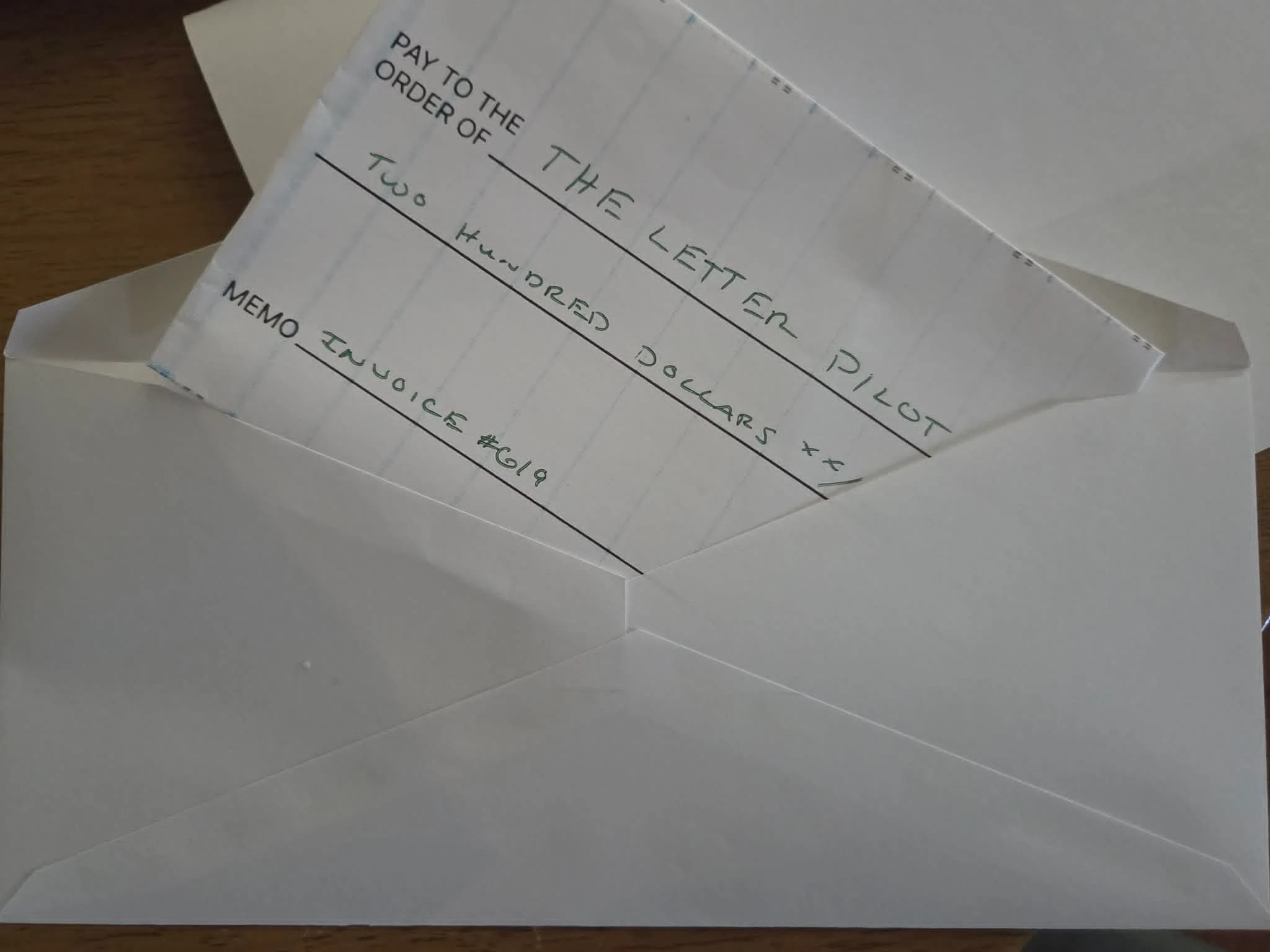
- Mail it directly at the Post Office; avoid blue collection boxes.
- Use Certified Mail so you can track it, or Registered Mail for the safest mailing method.
- Review your bank activity.
Good Check Writing Practices
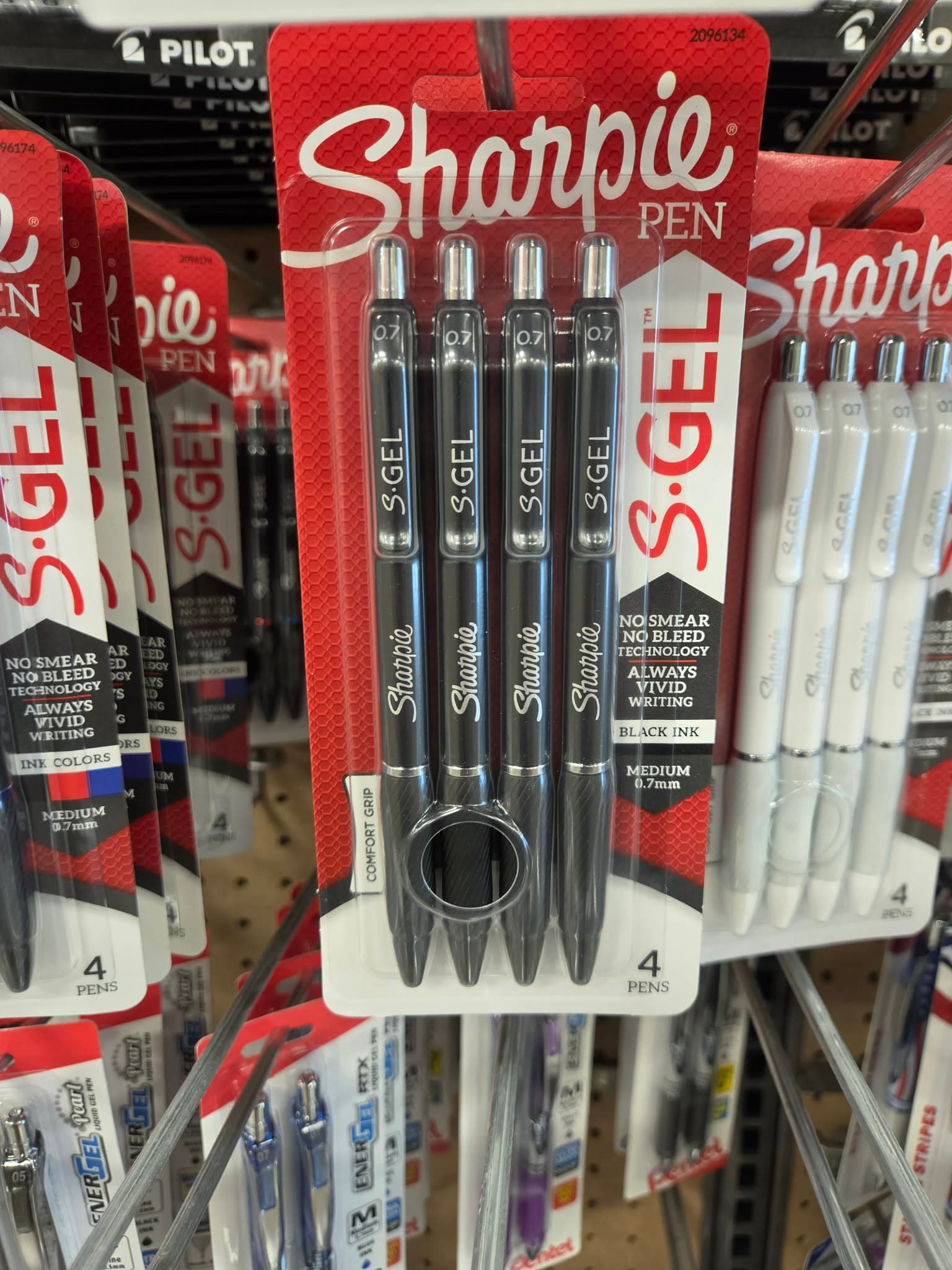
It may surprise you, but ink from a standard ballpoint pen can sometimes be removed from a paper check. Criminals use chemicals such as acetone or bleach to wash away the payee, dollar amount, or both, then rewrite the check before cashing it. This is called check washing. A black gel pen or another pen with indelible black ink is harder to remove and is a better choice when writing checks.
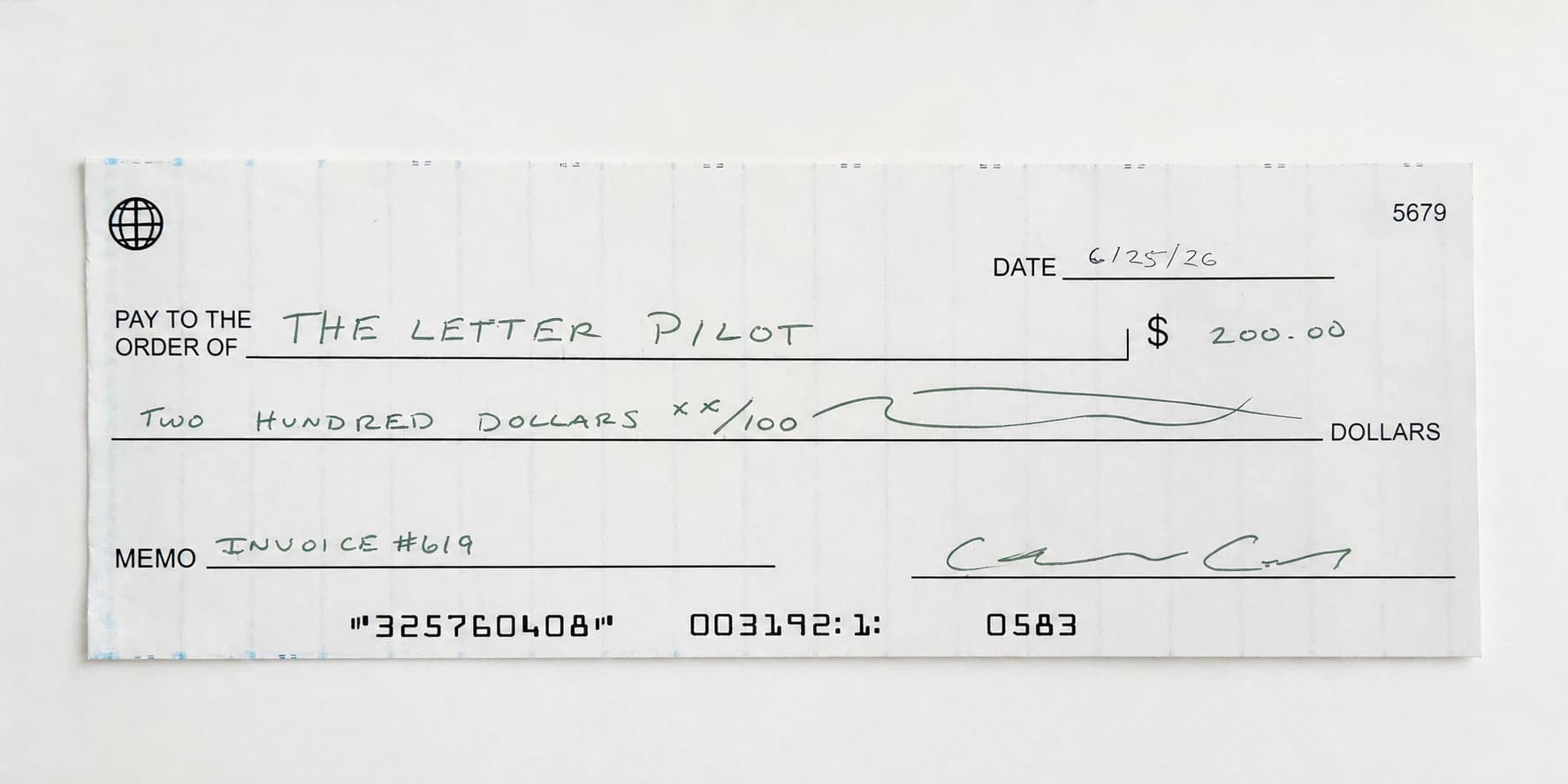
- Fill In the Payee. Never under any circumstances mail a check with a blank payee. Fill out the line completely.
- Start the numeric amount next to the dollar sign. Fill unused space so another digit cannot be added.
- Write the amount in words without gaps. Draw a line through the unused portion of that line.
- Use the memo line carefully. Don't put personal or sensitive information here. Use it only to reference what the check is for, such as an invoice number. Never include a Social Security number, driver's license number, or similar personal information.
- Save the details. Make note of the check number and details so you can verify it's cashed correctly after mailing.
Do not endorse a check you are sending
The recipient normally endorses the back when depositing it. As the person writing the check, your job is to complete the front accurately and make it payable to the intended recipient.
Conceal the check and address the envelope clearly
Don't advertise that there's a check in your envelope. Don't label the envelope anywhere to indicate that a payment or check is enclosed.
- Fold or wrap the check inside another piece of paper. You can use an invoice, a letter, or a plain sheet of paper. This helps obscure the contents from anyone trying to see through the envelope.
- Make sure you seal the envelope well. There should be no loose spots along the seal.
- As with any letter, make sure the recipient address is clear and accurate, as well as your return address. You don't want to mail your check to the wrong person. After confirming the payment address with the recipient, use our ZIP+4 lookup tool to check its postal format.
Choose the USPS service for the proof you need
The dollar amount is not the only consideration. Think about the payment deadline, whether the recipient disputes receipt, and how difficult it would be to stop and replace the check.
For a rough idea of transit time, check our mail delivery estimator, then allow extra time for the recipient to apply the payment. An estimate is not a delivery guarantee.
| USPS option | What it provides | When it fits |
|---|---|---|
| First-Class Mail | Letter delivery without end-to-end tracking | Routine payments where the recipient is trusted and formal proof is not needed |
| Certified Mail | A mailing receipt plus the date and time of delivery or attempted delivery | Rent, taxes, legal deadlines, or any payment where mailing and delivery records matter |
| Certified Mail + Return Receipt | Certified Mail documentation plus evidence of delivery showing who accepted it and the actual delivery address | Situations where a signature record could help resolve a later receipt dispute |
| Registered Mail | USPS's maximum-security handling, a mailing receipt, and delivery or attempted-delivery information | Especially sensitive or difficult-to-replace payments when added security matters more than speed |
Use a secure drop-off and do not let the envelope sit
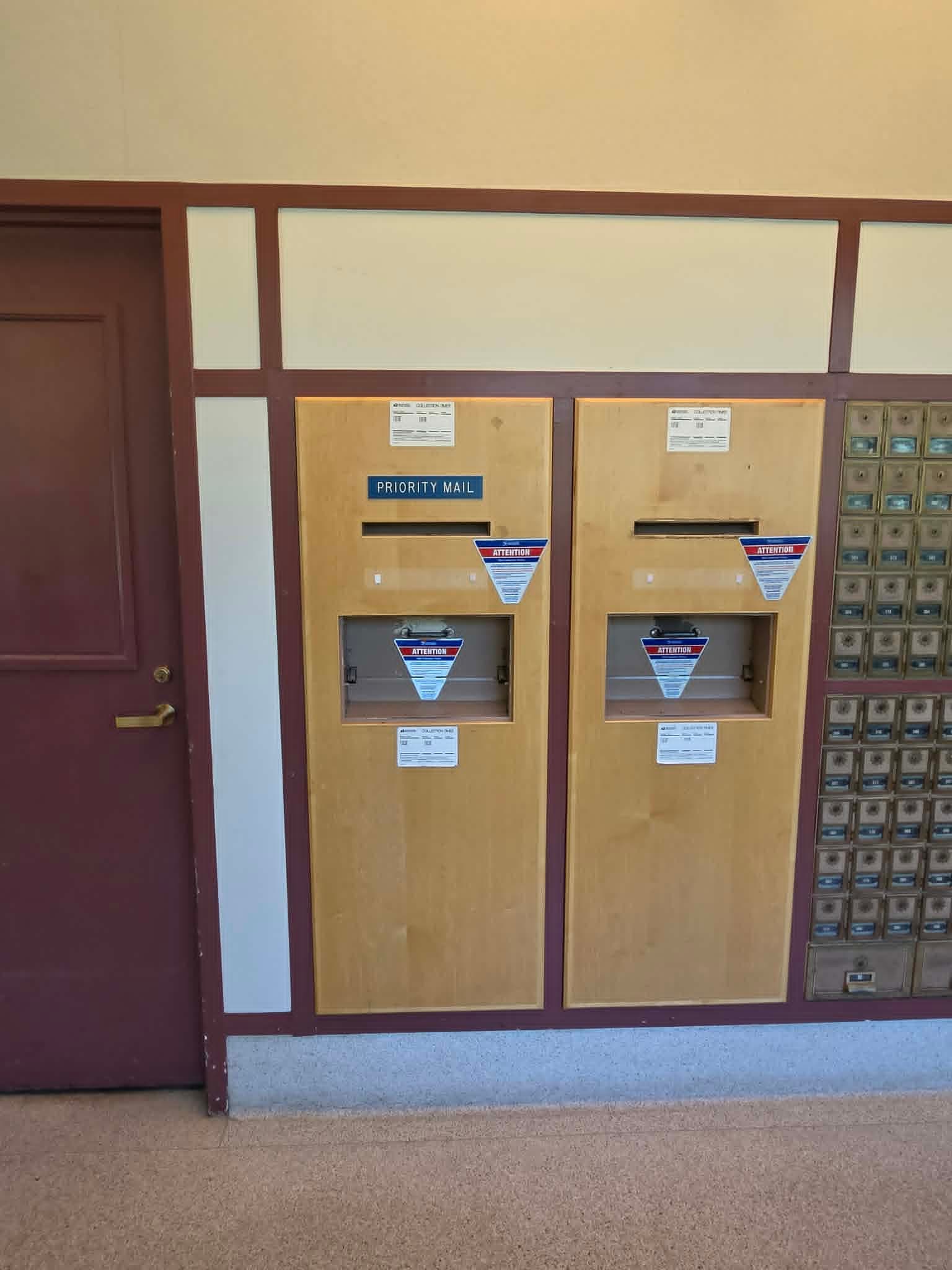
The best practice is to hand the envelope to a Postal employee inside your Post Office. Registered Mail must be presented to a retail employee or rural carrier. For Certified Mail, hand it to an employee when you want a postmarked mailing receipt. If you're sending a First-Class Mail letter and you're in a rush, avoid an outdoor blue collection box and use a clearly labeled interior Post Office mail drop instead. Double-check the posted collection time so your check does not sit there longer than necessary, and make sure the envelope falls completely into the slot. You don't want your check or letter sticking out where someone could grab it. Always make sure you have proper postage before sending your mail; the postage calculator can check the exact weight tier.
Track Your Payment
Delivery is only half of the process. A delivered envelope can still be misplaced, and a stolen check can be deposited after a delay. It's important to confirm that your payment was successfully applied to the correct account. We like to verify that the balance updates in whatever system we're paying through, even if that means picking up the phone and checking with the business directly.
What to do if the check is lost, altered, or stolen
Move quickly, but do not send a replacement blindly. Two valid-looking checks can create a second problem if the original later appears.
- Contact your bank or credit union immediately. Ask what it needs for a stop-payment order or a fraud claim. If it cannot stop payment, ask how you should proceed. Its team should be able to help you with the next steps.
- Save evidence. Keep the check number, check image, mailing receipt, tracking history, messages with the payee, and any altered cleared-check image.
- Report suspected mail theft or check washing. File with the U.S. Postal Inspection Service and your local police department.
- Watch the rest of the account. A stolen check exposes your bank routing number, account number, name, address, and signature.
- Coordinate the replacement. Confirm the original has not been deposited and follow your financial institution's advice before issuing a new check.
Other Check Issues
So, if The Letter Pilot doesn't mail checks, why are we writing about them so much? Checks caught our attention very early in the mailing process. We have had systems in place for some time to prevent scam mail from being sent through our platform, and one of the earliest scams our automated processes caught involved a fake check.
We won't reproduce any fake-check images here, but some of the examples we have seen are so absurd that you might think no one could fall for them. One scammer, for example, tried to send someone a fake check for nearly a billion dollars. The problem is that these checks can look just convincing enough to persuade someone to send money to a scammer because they believe they have received a large payment, or to draw them into a similar scheme.
If you receive a check printed on an ordinary sheet of paper, treat it as suspicious. Take any unexpected check to your bank and ask them to help verify its authenticity before you deposit it or send money to anyone. Scammers and thieves seem to be everywhere, so stay safe!
Frequently asked questions
Is it safe to mail a check through USPS?
It can be safe, but it is not risk-free! Make sure you follow the safe mailing practices for checks.
What is the safest way to mail a large check?
It is better to use another payment method unless a check is absolutely required. Electronic payment is often available, but never wire money unless you know and trust the recipient and have independently verified the payment instructions. Bank staff may confirm the details with you before initiating a wire because wire transfers can be difficult to reverse. If you must send a large check, follow all the safe practices listed above.
Can I mail a check with a regular stamp?
Yup! One First-Class Mail Forever stamp covers a standard domestic letter weighing up to 1 ounce, including a check, as long as the envelope meets USPS letter requirements.
What should I do if a mailed check is lost or stolen?
Contact your bank or credit union immediately. Ask whether a stop-payment request is appropriate and follow its instructions. If mail theft or check fraud is involved, report it to the U.S. Postal Inspection Service and local police, keep copies of the check and transaction records, and do not issue a replacement until you understand the status of the original.
Sources
- U.S. Postal Inspection Service: Check Washing
- U.S. Postal Inspection Service: How to Protect Your Checks
- Office of the Comptroller of the Currency: What Is Check Washing?
- Michigan Attorney General: Check Washing
- USPS Postal Explorer: Adding Extra Services
- USPS: Registered Mail - The Basics
- USPS: Insurance Limits for Cash and Checks
- USPS: How to Send a Letter or Postcard
- Federal Trade Commission: What to Know Before You Wire Money
More letter and mailing guides
USPS guide
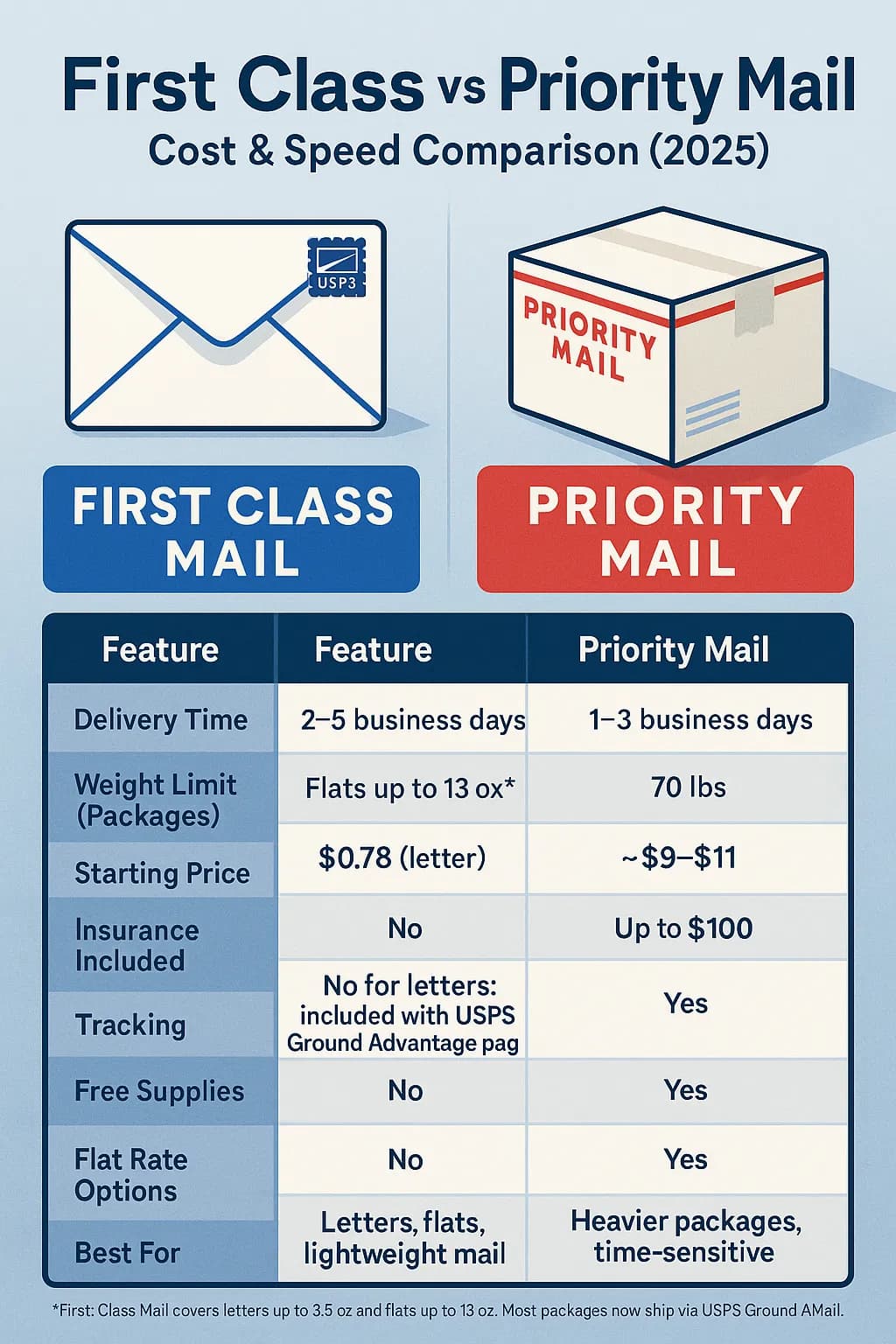
First-Class Mail vs. Priority Mail: Which Should You Use?
Compare USPS First-Class Mail vs. Priority Mail for letters and documents, including cost, delivery time, tracking, and Certified Mail options.
Read guide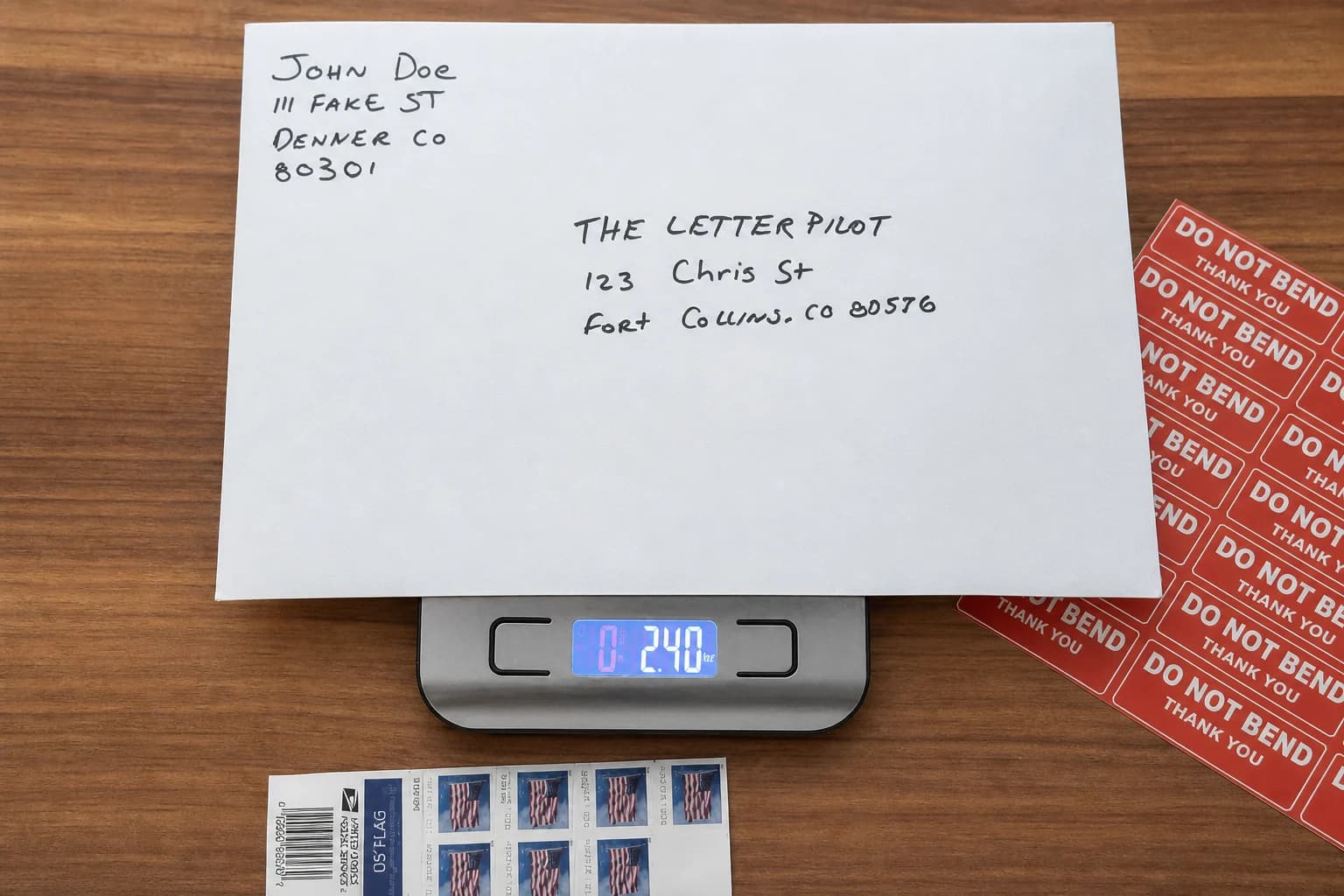
USPS guide
How Many Stamps Do I Need? USPS Stamp Calculator by Weight and Envelope Type
Use the USPS stamp calculator to figure out how many Forever or additional-ounce stamps to use by weight and envelope type. Need dollar postage rates instead? See 2026 USPS postage prices.
Read guide
USPS guide
Nonmachinable Stamps: When Does Your Envelope Need One?
Square invitation? Stiff greeting card? Find out when you need extra postage and whether your envelope can be mailed as a letter.
Read guide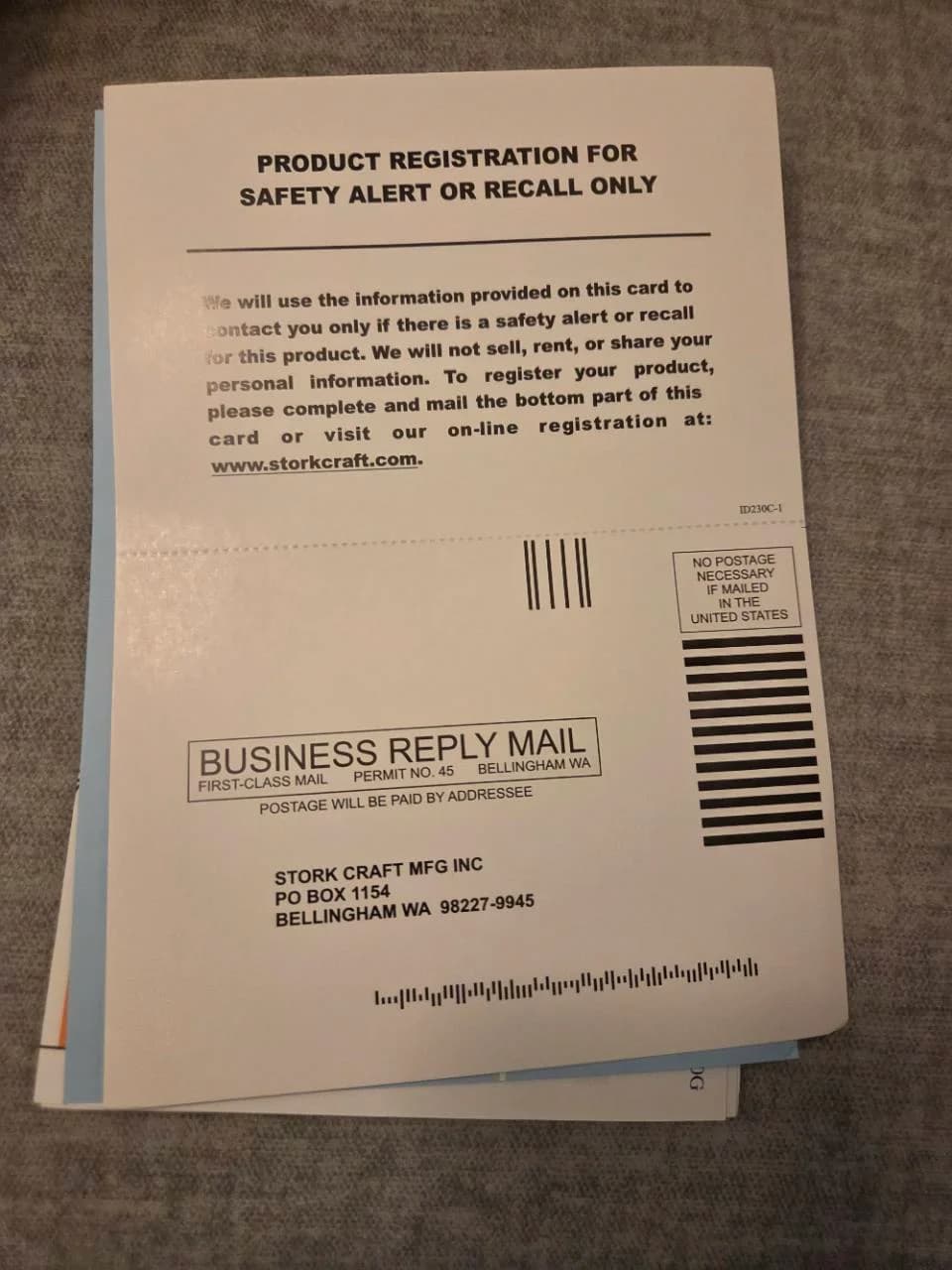
USPS guide
How to Send a Self-Addressed Stamped Envelope
A self-addressed stamped envelope is an envelope someone can use to mail something back to you. Here is how to prepare it without mixing up the two addresses.
Read guide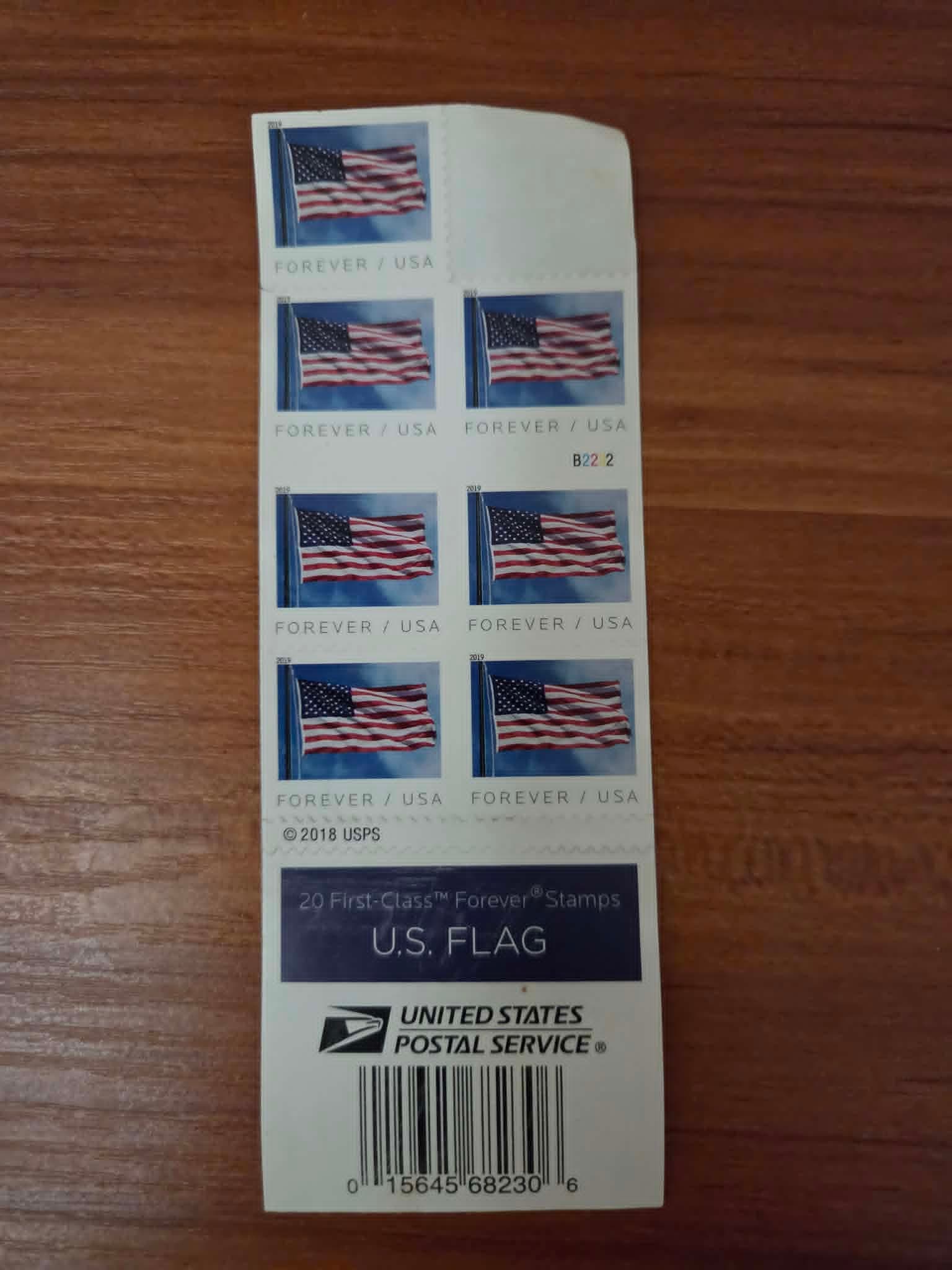
USPS guide
USPS Postage Rates: How Much Does It Cost to Mail a Letter?
Check USPS postage for letters, postcards, and large envelopes, with weight-based prices and a link to the postage calculator.
Read guide