First-Class Mail vs. Priority Mail: Which Should You Use?
Quick Answer
First-Class Mail is cheaper. Priority Mail is faster and costs more.
At The Letter Pilot, we offer First-Class Mail with options like Certified Mail, and we also offer Priority Mail. The right choice usually comes down to how quickly you need the letter delivered and whether you need a mailing and delivery record for something like a legal notice. Certified Mail is an extra service, not a separate mail class. USPS offers it with both First-Class Mail and Priority Mail.
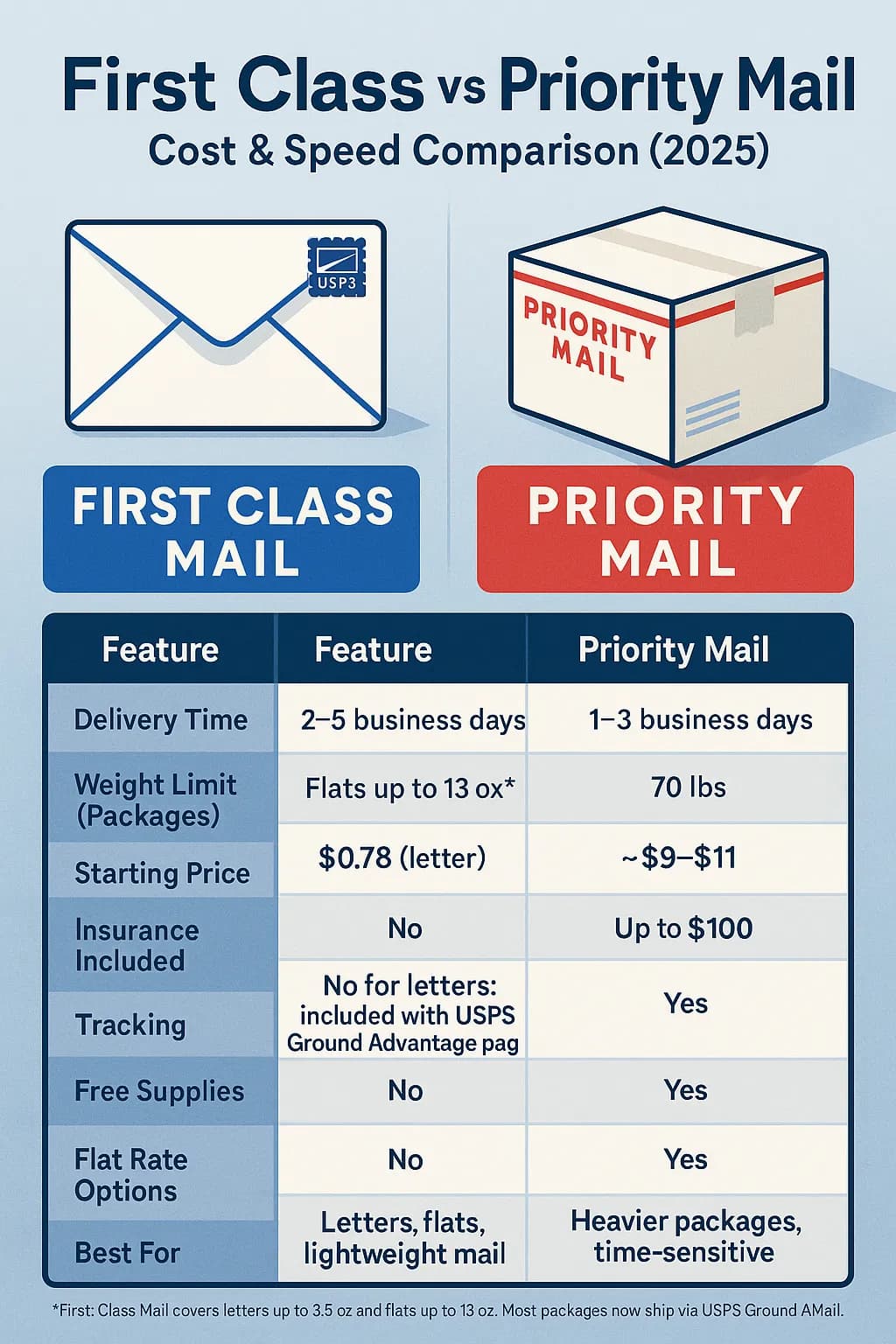
First-Class Mail vs. Priority Mail at a Glance
This comparison is for domestic USPS mail.
Cost
- First-Class Mail
- Cheaper for a regular letter
- Priority Mail
- Costs more
Expected delivery
- First-Class Mail
- 1–5 business days
- Priority Mail
- 2–3 business days
Tracking
- First-Class Mail
- Not included with ordinary letters; add a service such as Certified Mail
- Priority Mail
- Included with standard Priority Mail
Delivery times are estimates, not guarantees.
For a simple price comparison, a standard 1-ounce letter costs $0.82 to send with a First-Class stamp. Sending the same letter in a Priority Mail Flat Rate Envelope costs $12.90 at the Post Office. These are USPS postage prices, not The Letter Pilot's printing-and-mailing prices.
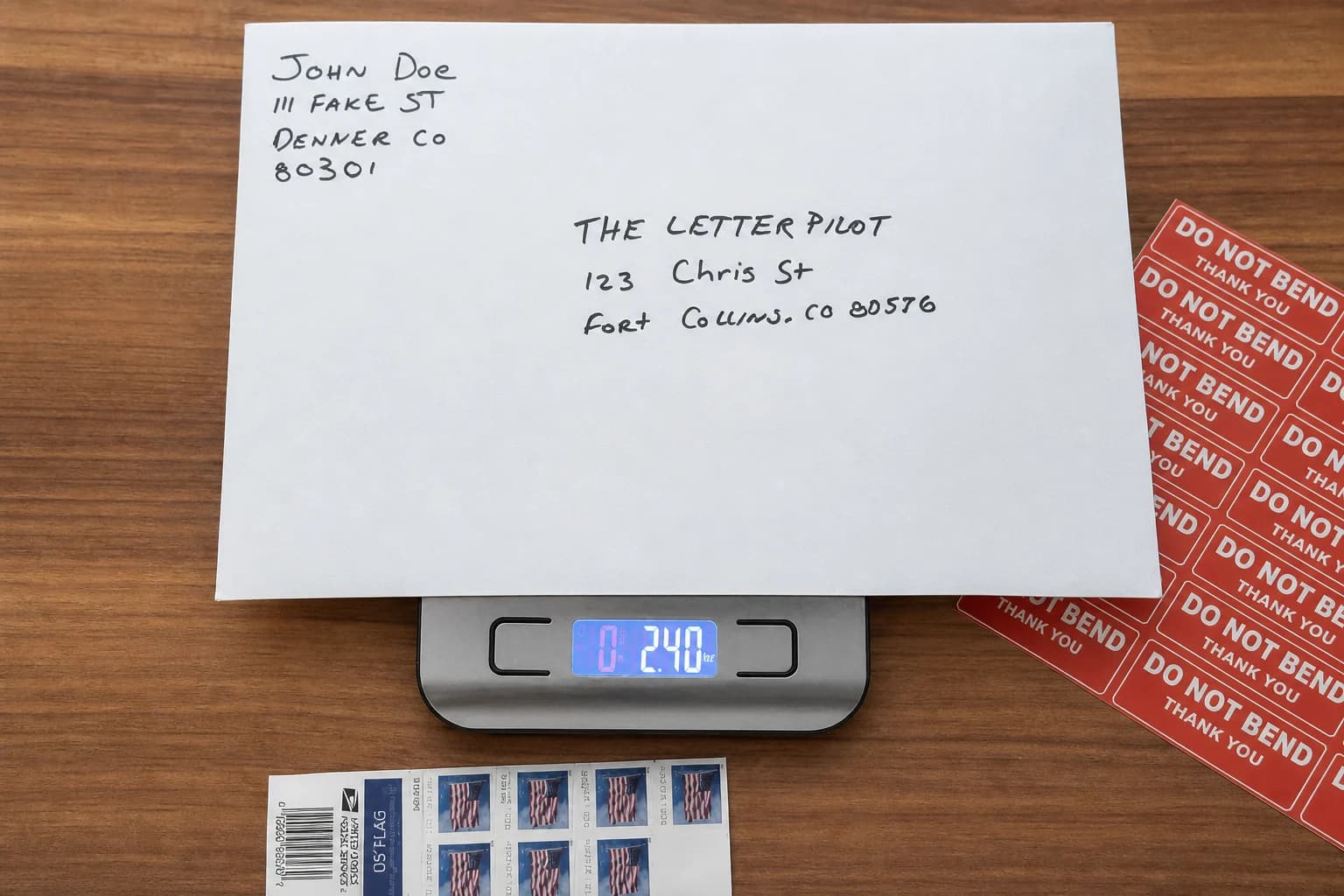
The envelope matters too. Weight, size, thickness, and flexibility can all affect the postage. A thick packet of paperwork may need large-envelope postage, while a large rigid mailer can count as a package even though it looks like an envelope. Our envelope size checker can help you check the format before you mail it.
Is Priority Mail Faster Than First-Class Mail?
Yes—Priority Mail is the faster service. USPS estimates 2–3 business days for Priority Mail, compared with 1–5 business days for First-Class Mail. These are estimates, not guaranteed delivery dates.
Use our USPS delivery time estimator to compare estimates by state or ZIP Code. See our USPS delivery times guide for more on the delivery options.
Which Should You Use for a Letter?
Our recommendation: use First-Class Mail for everyday letters when keeping the cost down matters most. Choose Priority Mail when faster delivery and included tracking are worth the extra cost. If you need a mailing receipt and a delivery or attempted-delivery record, consider Certified Mail.
For a document packet, you can use a Priority Mail Flat Rate Envelope if everything fits and the flap closes along its normal folds.
Compare the complete price, including any extra services. Use our mailing cost calculator for an estimate, or the USPS postage calculator for current USPS prices. Our letter postage guide covers stamp prices by weight.
Tracking Is Not the Same as a Signature Record
An ordinary First-Class letter does not include USPS Tracking. Standard Priority Mail does, but Priority by itself does not normally require the recipient to sign. USPS also lists an exception to included tracking for its Prepaid Forever Priority Mail Flat Rate products.
Certified Mail gives you a mailing receipt and delivery or attempted-delivery information. Add Return Receipt if you want a copy of the signature record. It can be electronic or a mailed green card. See our Certified Letter guide for preparing the letter and keeping your records.
Does Priority Mail Insurance Cover Your Letter?
Most eligible Priority Mail shipments include up to $100 of insurance. That does not mean an important letter is automatically insured for $100: USPS says Priority Mail insurance covers merchandise, not correspondence. If you are choosing a service for documents, pay attention to tracking and the mailing record rather than treating the included insurance as protection for the letter's importance.
What If You Are Sending a Package?
First-Class Mail and the old First-Class Package Service are not the same thing. USPS Ground Advantage replaced First-Class Package Service for domestic packages. First-Class Mail still exists for letters and qualifying large envelopes. If you are shipping an item in a box, compare Ground Advantage with Priority Mail instead.
Mailing a Letter Online
If you would rather upload a document and have it printed and mailed for you, compare The Letter Pilot's standard letter mailing and Priority Mail options.
Sources
- USPS Notice 123 price list: retail postage used in the letter and Flat Rate Envelope example.
- USPS First-Class Mail: eligible mail, weight limits, and postage basics.
- USPS Priority Mail: expected delivery, tracking, packaging, and included-insurance exceptions.
- USPS First-Class Mail questions: delivery standards and tracking options.
- USPS Domestic Mail Manual: additional mailing services: Certified Mail eligibility, Return Receipt, and signature services.
- USPS domestic claims: the distinction between insurable merchandise and correspondence.
- USPS domestic mail and shipping services: service estimates and the Priority Mail Express guarantee.
- USPS Ground Advantage launch: replacement of First-Class Package Service.
More mailing guides
USPS guide
How Many Stamps Do I Need? USPS Stamp Calculator by Weight and Envelope Type
Use the USPS stamp calculator to figure out how many Forever or additional-ounce stamps to use by weight and envelope type. Need dollar postage rates instead? See 2026 USPS postage prices.
Read guide
USPS guide
Nonmachinable Stamps: When Does Your Envelope Need One?
Square invitation? Stiff greeting card? Find out when you need extra postage and whether your envelope can be mailed as a letter.
Read guide
USPS guide
How to Send a Self-Addressed Stamped Envelope
A self-addressed stamped envelope is an envelope someone can use to mail something back to you. Here is how to prepare it without mixing up the two addresses.
Read guide
USPS guide
USPS Postage Rates: How Much Does It Cost to Mail a Letter?
Check USPS postage for letters, postcards, and large envelopes, with weight-based prices and a link to the postage calculator.
Read guide
USPS guide
How to Mail a Check Safely
Use indelible black ink, conceal the check, mail it before the last pickup, and choose tracking or proof of delivery when the payment matters.
Read guide