How Long Does USPS Mail Take? First-Class Delivery Times by Class
If you were like me, the difference between First-Class Mail and Priority Mail was confusing at first. I also was not sure whether paying more for Certified Mail made a letter travel faster or simply added a signature. Before we go any further, here is the important distinction: First-Class Mail can be a regular stamped letter or a letter sent with Certified Mail service. Certified Mail adds tracking and proof of delivery, but it does not make the letter move faster. If speed matters, Priority Mail is the service to consider. We will start with First-Class Mail, which usually takes 1 to 5 business days, and then cover the other common mailing scenarios below.
Distance Matters
The more mail I send, the more I notice how efficient the Post Office usually is. I have mailed from Michigan to Ohio many times. USPS will often give me an estimate of about four days, but those pieces usually arrive in roughly two days. That is not a guarantee, but in my experience USPS tends to underpromise and overdeliver on that route.
The distance between the two Post Offices matters. Michigan to Ohio is a relatively short trip. If I were mailing from New York to California, I would plan around the longer end of the delivery window instead. USPS calculates service standards using the origin, destination, and mail service, so two letters mailed on the same day can have different expected delivery dates.
Even so, the idea that USPS can sort through millions of mailpieces and move one particular stamped envelope from New York to California within five business days is pretty astounding.
How Long Does Regular USPS Mail Take?
Regular USPS mail, specifically First-Class Mail, has an estimated delivery window of 1 to 5 business days. The expected date depends on the origin and destination ZIP Codes, mailing date, mail type, and acceptance location. Below, we explain how those factors change the estimate.
How Long Does Mail Take From State to State?
USPS does not publish one delivery window for adjacent states and another for mail crossing several states. First-Class Mail has an official service-standard window of 1 to 5 business days. The expected date for a particular letter depends on the five-digit origin and destination ZIP Codes, the mailing date, the type of First-Class Mail, and where USPS accepts the piece.
A letter going from New York to Pennsylvania may receive a shorter estimate than one going from New York to California, but the state names alone are not enough to promise a delivery time. Use the exact ZIP Codes when checking the USPS service-standard tool.
How Long Does USPS Mail Take Within the Same State?
Mailing within the same state does not create a separate USPS guarantee. A letter traveling across Texas or California may have a different standard than a letter traveling between two nearby ZIP Codes in the same metro area. USPS says some local and regional First-Class Mail receives a 2 or 3 day service standard, but the exact expectation must be calculated from the ZIP Code pair. The overall First-Class Mail window remains 1 to 5 business days and is not guaranteed.
If you need a practical number for planning, try our letter delivery time estimator by state or ZIP Code. Use state mode for a broad estimate or enter the origin and destination ZIP Codes for a USPS ZIP-to-ZIP benchmark when available. Neither is a delivery guarantee.
Still addressing the envelope? Our ZIP+4 lookup can find the full mailing ZIP Code for the recipient's address. The delivery estimator uses the first five digits.
How Long Does First-Class Mail Take?
First-Class Mail is USPS's standard service for letters and postcards under 3.5 oz. Its estimated delivery window is 1 to 5 business days nationwide. This is the service most people use for personal letters, bills, and correspondence. For faster options, see Priority Mail, with a 2 to 3 business-day estimate, or Priority Mail Express, with 1 to 3 day service, below.
Regional Mail Delivery
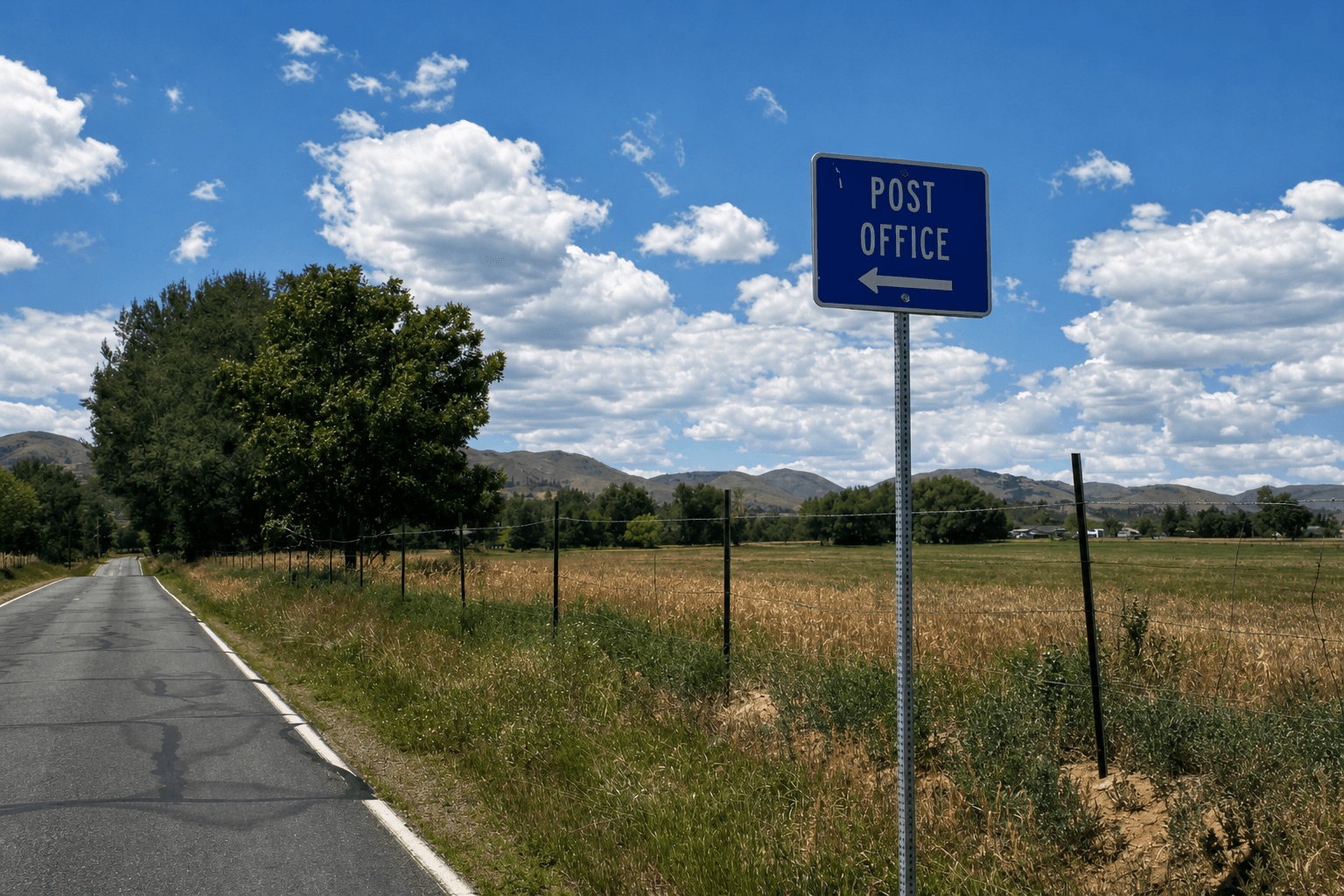
Mail delivery to rural and regional locations can vary quite a bit. I like to use small mountain Post Offices as an example. Before a letter reaches the mailbox, USPS may need to move it from a regional processing facility to a smaller Post Office and then send a carrier along mountain roads to complete the route.
That does not mean every rural letter will be late. It does explain why two ZIP Codes in the same state can receive different service standards. USPS says the distance between the collection Post Office and its regional processing facility can affect the expected delivery time. Weather, road conditions, and other service disruptions can add delays as well.

What Can Affect Mail Delivery Time?
Distance matters, but it is not the only part of a USPS delivery estimate. These are the practical factors I look at when a letter is taking longer than expected.
When USPS accepts the mail
A piece deposited after the location's final collection time may not enter that day's mailstream. Sundays and postal holidays also affect how business-day estimates are counted.
The origin and destination ZIP Codes
USPS calculates standards from the specific ZIP Code pair. The distance from the collection Post Office to a regional processing facility can affect the expected time, particularly for some rural origins.
The service you choose
First-Class Mail, Priority Mail, and Priority Mail Express have different service standards. Certified Mail adds records and delivery verification, but it does not make First-Class Mail travel faster.
Conditions along the route
USPS lists severe weather, natural disasters, traffic, staffing fluctuations, and route changes among the circumstances that can delay delivery. Check the USPS Service Alerts page when delays affect an entire area.
Saturday delivery follows its own practical considerations. I cover those in more detail in the USPS Saturday delivery guide.
If You Mail a Letter on Friday or the Weekend
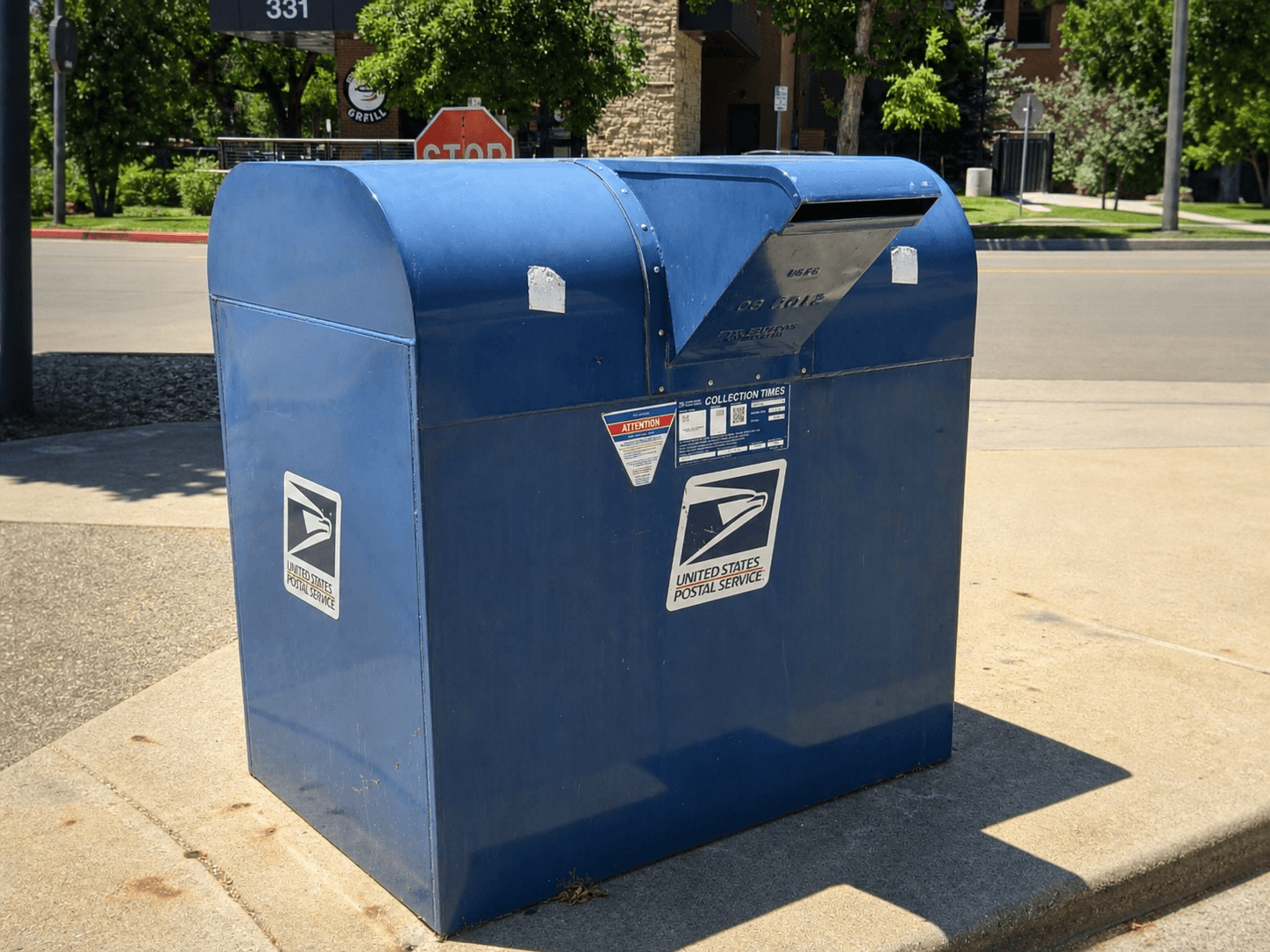
USPS does a good job of posting collection times so you can see when a blue collection box is scheduled to be emptied. The pickup times are printed on the label and may differ by day of the week. You can see an example of that label on the front of the box below.
If you deposit a letter after the final pickup shown for that day, it will remain in the box until the next scheduled collection. A Friday-evening deposit may be collected Saturday if that box lists a Saturday pickup. If you miss the Saturday collection, the next pickup is often Monday, or the next postal business day when Monday is a holiday. That can push the expected arrival date back, so check the label when timing matters. USPS also notes that a piece is not necessarily postmarked on the same day it is collected.
Faster Mail Delivery Options
When First-Class Mail is not fast enough, the USPS services to compare are Priority Mail and Priority Mail Express. Certified Mail does not make a letter move faster. It adds a mailing record and delivery or attempted-delivery verification to an eligible mail class.
| Service | Expected delivery | What to know |
|---|---|---|
| First-Class Mail | 1 to 5 business days | Not guaranteed |
| Priority Mail | 2 to 3 business days | Not guaranteed |
| Priority Mail Express | 1 to 3 days | Money-back guarantee, subject to USPS terms |
| Certified Mail | Uses the standard of the underlying eligible mail class | An extra service, not an expedited mail class |
When Should I Worry About Late Mail?
First-Class Mail has an estimated delivery window of 1 to 5 business days, and USPS does not guarantee arrival on a particular day. If the fifth business day passes without delivery, the letter may be delayed, but that does not automatically mean it is lost.
- After 5 business days: Confirm the mailing date and delivery address. If the piece has a tracking or Certified Mail number, check its latest USPS status.
- Seven days after mailing: USPS allows you to submit a Missing Mail search request. The application asks for the sender and recipient addresses, mailing date, a description of the envelope or package, and a tracking number when one is available.
- If the letter is time-sensitive: Do not wait indefinitely for a search result before protecting a deadline. Consider sending a replacement using the service that fits your needs. Certified Mail provides a mailing receipt and delivery or attempted-delivery verification. A Return Receipt is the additional service used when you need a copy of the recipient's signature.
Before assuming a piece is lost, check the USPS Service Alerts page for weather, transportation, facility, or local delivery disruptions. If the piece is still missing, use the official USPS Missing Mail page.
Frequently Asked Questions
How long does USPS First-Class Mail take?
USPS First-Class Mail has an estimated delivery window of 1 to 5 business days. The expected date for a specific mailing depends on the origin and destination ZIP Codes, mailing date, mail type, and acceptance location. First-Class Mail is not guaranteed.
How can I send mail faster than regular USPS delivery?
USPS lists Priority Mail at 2 to 3 business days and Priority Mail Express at 1 to 3 days. Priority Mail is not guaranteed. Priority Mail Express includes a money-back guarantee subject to USPS terms.
Need to mail a letter?
Upload a PDF or type your letter. We will print it, prepare the envelope, apply postage, and hand it to USPS. Allow one additional business day for processing.
Sources
USPS service standards and features can change. These primary USPS sources were checked when this guide was updated on July 12, 2026.
- USPS: First-Class Mail for the 1 to 5 business-day delivery window and First-Class Mail features.
- USPS FAQ: Domestic Mail Extra Services for what Certified Mail adds, including a mailing receipt and electronic delivery or attempted-delivery verification.
- USPS: Priority Mail for Priority Mail delivery estimates, tracking, insurance, and service features.
- USPS: Priority Mail Express for its 1 to 3 day service and money-back guarantee terms.
- USPS FAQ: Delayed Mail and Packages for delivery standards, guarantees, and common causes of delays.
- USPS FAQ: Missing Mail for the seven-day Missing Mail search eligibility window, required search information, and what happens after a request is submitted.
- USPS Service Alerts for current weather, facility, transportation, and local delivery disruptions.
- USPS FAQ: What Is a Collection Box? for posted collection times, day-to-day schedule differences, holiday exceptions, and USPS guidance about collection dates and postmarks.
- USPS PostalPro: Service Standards for how USPS determines expected transit time using the mail product and origin and destination ZIP Codes.
- USPS: Enhanced Service Standards for the five-digit ZIP Code lookup method, the 1 to 5 day First-Class Mail range, regional turnaround standards, and how distance from regional processing facilities can affect expected timing.
The information in this guide is for educational purposes only. The Letter Pilot does not guarantee USPS delivery times, routing, or processing speed. All mail is handled solely by the United States Postal Service, and actual delivery times may vary.
More USPS delivery guides
USPS guide
USPS International Package Tracking: Updates & Help
Check USPS international tracking options, find your destination country’s tracking page, understand missing updates, and see when to open a USPS inquiry.
Read guide
USPS guide
How to Track Certified Mail
Learn where to find your Certified Mail tracking number, check delivery status, and get proof of delivery when available.
Read guide
USPS guide
Track Your Passport: Application Status & Delivery Tracking
Check your passport application status through the State Department and use USPS tracking when your finished passport book is mailed back to you.
Read guide
USPS guide
USPS Tracking Not Updating: What to Do
What a quiet USPS tracking page can mean, how to read the current status, and when to use USPS support or Missing Mail.
Read guide
USPS guide
USPS Lost Mail: How to File a Missing Mail Search
If a letter or package never arrived, start with tracking and then use the USPS Missing Mail process when the mailpiece is eligible for a search.
Read guide